Farmers urged to plan as strong El Niño takes hold
With regional forecasters pointing to a hotter, drier 2026/27 season, agronomists say timing, moisture conservation and spreading risk will matter more than ever.
Zimbabwe's farmers are heading into what could be one of the most testing cropping seasons in recent years.
The 33rd Southern Africa Regional Climate Outlook Forum (SARCOF-33), held in Swakopmund, Namibia, in late August, found an increased likelihood of below-normal rainfall over much of Zimbabwe during critical stages of the October 2026 to March 2027 rainy season. El Niño conditions are already established, and most climate models point to a strong to very strong event peaking around October to December.
The Meteorological Services Department (MSD) has noted that, historically, El Niño has carried a 65 percent chance of below-normal rainfall in Zimbabwe.
Agronomists say the message for farmers is preparation, not alarm. "While no one can control the weather, every farmer can prepare for it," said Wendy Madzura, group head of agronomy at seed house Seed Co, which has issued a regional El Niño preparedness guide drawing on SARCOF and national weather service outlooks.
Not just drought, but volatility
The guide warns that the risk is not simply a dry season. Natural Regions I and II, the Eastern Highlands and the central watershed, including Nyanga, Vumba and the Honde Valley, have seen increasingly erratic rainfall in recent years, with mid-season dry spells followed by intense cyclonic storms that deliver large amounts of rain in a short time.
At the same time, the drier Natural Regions IV and V, in the Lowveld, parts of Masvingo and Matabeleland South, have occasionally recorded well-above-normal totals during strong El Niño years or tropical cyclone events. Agronomists describe this as a widening of the range rather than a wetting trend: the same areas that suffer recurrent drought are now also exposed to flash floods that disrupt planting, erode soils and damage infrastructure.
The effects reach beyond the fields. Below-normal rainfall and extreme heat could put further strain on already stretched urban water supplies in Harare, Bulawayo, Mutare, Chinhoyi, Marondera and Gweru. Pasture shortages for livestock are also likely, and the Mashonaland provinces and Manicaland have been identified as being at extreme risk of veld fires.
There is one bright spot. National dam storage stood at 87.2 percent on 27 August, well above the seasonal average of 66.2 percent, giving farmers with access to irrigation a significant water buffer going into the season. overnment has said it is accelerating irrigation development to make use of stored water.
What farmers can do now
Wait for effective rain. Agronomists advise against planting on the first showers. Planting should begin only once effective rainfall has been received, generally at least 30mm, ideally 30–35mm over two consecutive days, so that seed does not germinate and then die in a dry spell. Preparing land before the rains means planting can start as soon as the soil is ready.
Stagger planting. Rather than planting a whole field at once, farmers are encouraged to plant in phases over days or weeks. Spreading establishment across the season reduces the chance of total crop failure if a dry spell hits at a critical stage.
Spread risk across maturity groups. Farmers should match crop maturity to the rainfall potential of their natural region and planting date, and use at least two maturity groups rather than relying on a single variety. Ultra-early to early maturing hybrids suit the drier, rain-fed regions, while medium- and long-season varieties are best kept for irrigated fields and high-rainfall areas. Using certified seed, rather than retained seed, is strongly recommended in a season with little margin for error.
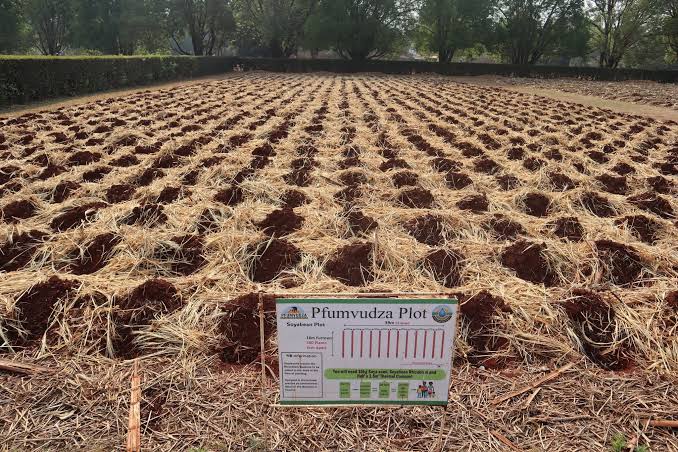
Make every drop count. Moisture conservation is the priority. Recommended practices include Pfumvudza/Intwasa conservation farming, tied ridges, potholing, mulching, dip-ploughing and wet ripping to capture run-off and help rain soak in. Crop residues should be kept on the land rather than burned, as they reduce evaporation, protect soil and build organic matter over time. Repeated cultivation dries out the soil and should be limited; deep ripping is best used only where a compacted layer has been confirmed.
Plant fewer, not more. In dry conditions, too many plants per hectare means each one reaches wilting point sooner. Agronomists advise reducing plant populations in line with realistic rainfall and soil moisture, so every plant has its share of water and nutrients.
Keep fields clean and scout often. Weeds compete directly with crops for scarce moisture and should be controlled early. Heat and drought also make crops more vulnerable to pests and disease, particularly fall armyworm and maize streak virus. Regular scouting, especially after dry spells and the first effective rains, combined with crop rotation, field sanitation and pesticide use only when damage thresholds are reached, forms the basis of integrated pest management.
Split the nitrogen. Applying top-dressing in splits, rather than all at once, reduces the risk of losing fertiliser if early rains are followed by a dry spell.
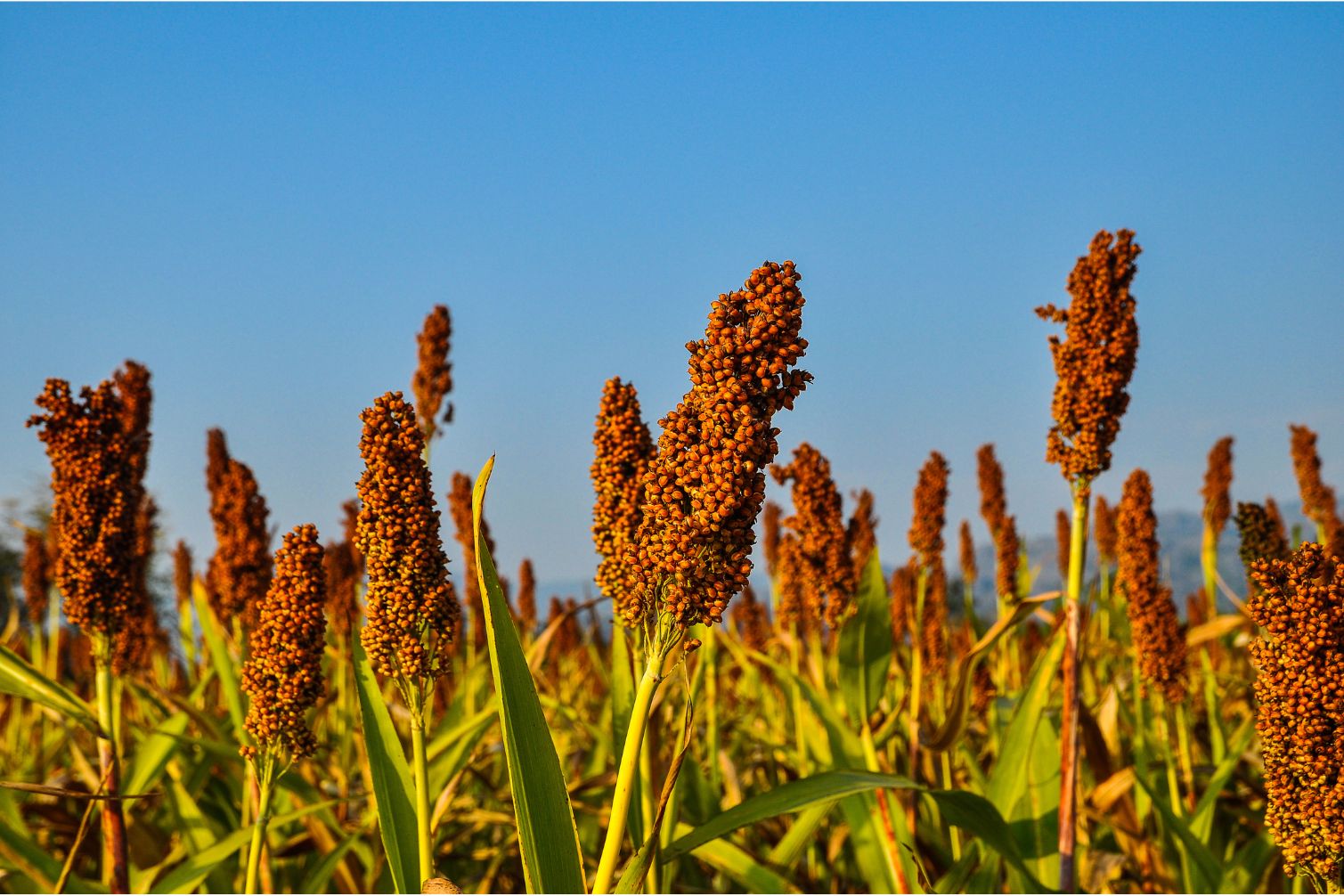
Diversify. Traditional small grains such as sorghum and millet, along with legumes such as cowpeas, beans and soya beans, can provide a safety net alongside maize. Combining crops with livestock, preserving stover and other feed, and keeping home gardens all help spread risk across more than one source of food and income.
Planning beyond the field
The guide also points to measures beyond the farm gate: rehabilitating boreholes, solar-powered piped water schemes, dam construction and irrigation development, as well as agricultural insurance, access to credit and strategic food reserves to cushion households against a poor harvest. Buying inputs early, before peak demand, can also help farmers avoid shortages and price increases once the rains begin.
Regenerative practices such as keeping soil covered, rotating crops and reducing tillage tend to bring cumulative rather than immediate benefits, the guide cautions, and no single practice guarantees protection against extreme weather. Farmers are encouraged to start with manageable changes, observe the results and adapt.
Forecasts are guidance, not certainty
Seasonal forecasts are probabilistic and conditions can vary considerably within a district. Farmers are advised to follow updated forecasts and advisories from the MSD and to work with their local Agricultural and Rural Advisory Services (Agritex) officers as the season develops.
As the guide puts it, the farmers most likely to come through a difficult season are those who plan early, match their crops to their conditions and conserve every millimetre of moisture.

Related Content