Food access set to tighten as Zimbabwe heads towards late 2026
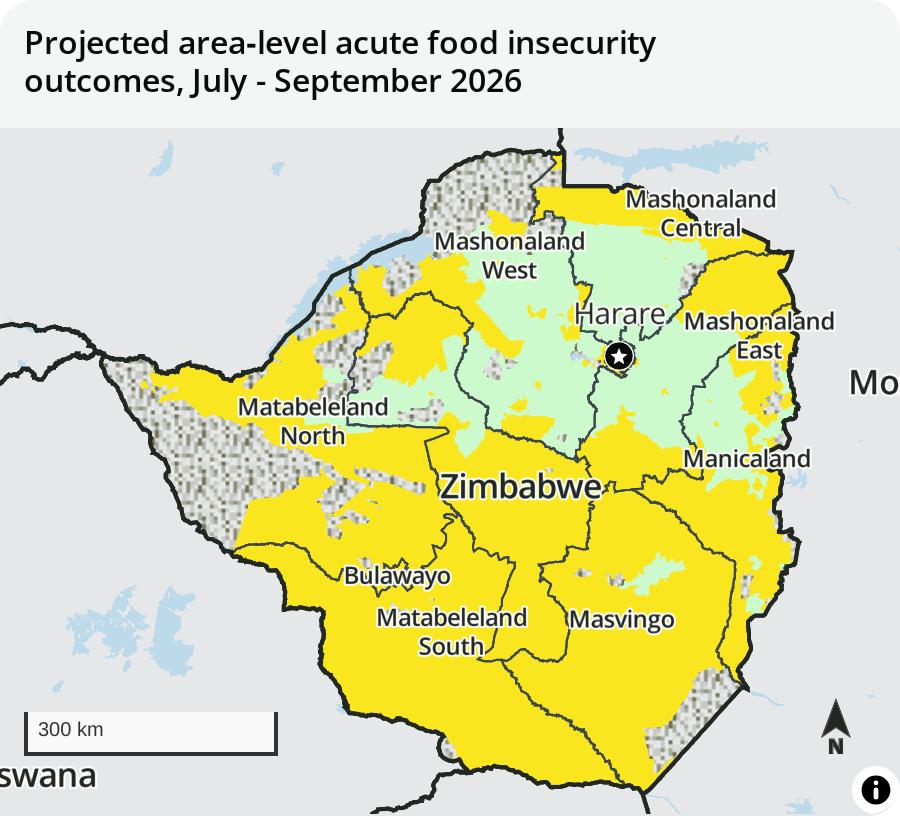
High cereal prices, depleted household stocks and weaker purchasing power are expected to put increasing pressure on food security in Zimbabwe later this year, according to a new FEWS NET assessment.
Zimbabwe's relatively good 2026 harvest is providing an important cushion for many households, but that cushion is not expected to last everywhere.
The latest FEWS NET Zimbabwe Key Message Update, covering July 2026 to January 2027, warns that food access is likely to deteriorate in the latter part of the year, particularly in the country's traditional deficit-producing areas.
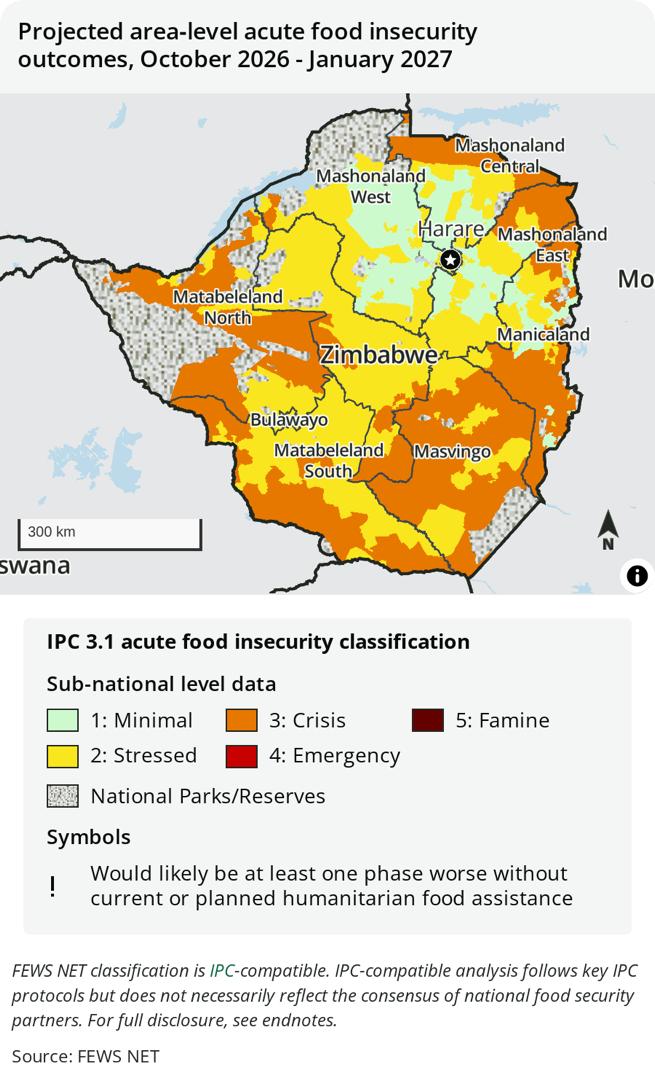
FEWS NET expects Crisis (IPC Phase 3) food security outcomes to emerge from October in several deficit-producing areas in the south, east, west and extreme north. Until September, most households in these areas are expected to remain in Stressed (IPC Phase 2) conditions, supported by their 2026 harvests, casual labour and other livelihood activities.
The concern is what happens when those household food stocks run out.
As more families become dependent on markets for their staple food, their already limited purchasing power is expected to become increasingly important. Poor households in deficit areas are already struggling to afford essential non-food items because of below-average incomes and high prices.
A tale of two maize markets
The food security picture is being shaped by a striking difference between Zimbabwe's surplus- and deficit-producing areas.
In surplus-producing areas, markets are well stocked following the above-average 2026 harvest. Maize grain is averaging around USD 0.22 per kilogram, approximately 30 percent below both the same period last year and the previous month.
The situation is very different in deficit-producing areas, where grain supplies remain low and farmer-to-farmer sales are limited. Restricted supply has pushed maize grain prices to between USD 0.34 and USD 0.57 per kilogram.
For households that have little or no grain of their own, the difference is significant.
Maize meal remains widely available and relatively affordable, particularly when the additional cost of milling unprocessed grain is taken into account. However, the underlying problem remains: households with weak incomes have fewer options when they are forced to purchase food rather than consume their own production.
Remittances under pressure
Another potential source of household income is also weakening.
FEWS NET reports that cash and in-kind remittances are likely to decline as Zimbabweans living in South Africa return home amid xenophobic-related social and economic attacks.
The impact is expected to be felt particularly strongly in southern Zimbabwe, where many households have historically depended on remittances from South Africa.
More than 115,000 returnees were reported through Beitbridge Border Post between the end of May and the end of July, with approximately one-third returning with government assistance.
Government agencies, UN organisations and non-governmental and community-based organisations are responding with assistance including documentation, food, transportation, health services, temporary shelter and longer-term reintegration support.
But the return of migrants can also remove an important income stream from households that have depended on money sent home from South Africa.
The cost of getting around
Household purchasing power is being squeezed by other costs too.
Petrol and diesel prices remain around 25 percent and 28 percent higher respectively than before tensions escalated in the Middle East in February 2026.
Public transport fares are also reported to be 50 to 100 percent above February levels, adding further pressure to household budgets, particularly in urban areas.
While prices for most non-staple cereal foods and other commodities, inflation and exchange rates have remained relatively stable, the combination of food, transport and other living costs leaves poorer households with little room to absorb another shock.
Preparing for another difficult rainfall season
The assessment also looks ahead to the possibility of El Niño-related impacts.
The Zimbabwean government has put preparedness and mitigation measures in place for the coming year, recognising that El Niño has historically been associated with below-average rainfall in Zimbabwe.
Among the measures being pursued are strengthening the Strategic Grain Reserve, potentially allowing early grain imports by private businesses and individuals, and increasing national grain availability to help moderate prices.
Agricultural measures include promoting conservation agriculture through Pfumbvudza/Intwasa, encouraging short-season and early-maturing varieties, drought-tolerant crops and expanding irrigation.
There is also an emphasis on livestock resilience, including producing and stockpiling supplementary feed to reduce livestock losses during periods of poor rainfall.
Improved access to finance and agricultural insurance is another part of the proposed response.
A warning rather than a forecast of famine
The FEWS NET report does not suggest that Zimbabwe is facing a nationwide food crisis. Rather, it highlights how geography, household production and purchasing power can produce very different food security outcomes within the same country.
For farmers in surplus-producing areas, the 2026 harvest has brought well-stocked markets and comparatively low maize prices. For households in deficit areas, however, dwindling household stocks and expensive grain could create a much more difficult second half of the year.
The coming months will therefore be important. The performance of rainfall, the availability and price of grain, household incomes, remittance flows and the effectiveness of government preparedness measures will all influence how severe the projected deterioration becomes.
For Zimbabwe's rural communities, the message is clear; a good harvest provides breathing space, but resilience depends on what happens after the granaries begin to empty.
Source: FEWS NET, “Zimbabwe Key Message Update July 2026 – January 2027: Food access likely to decline in late 2026 amid high cereal prices in deficit areas.”
What is FEWS NET?
FEWS NET - the Famine Early Warning Systems Network - is a United States Government-funded activity that monitors food security and provides early warning and analysis of potential food crises. Its Zimbabwe assessments track factors such as food availability, prices, household purchasing power, livelihoods and climate conditions to identify where food insecurity may worsen. FEWS NET's analysis is designed to provide early warning so that governments, humanitarian organisations and other decision-makers can prepare and respond.

Related Content