Beef and Small Stock School to equip farmers with practical knowledge, genetics and market insight
Zimbabwe’s Beef School and Small Stock School, being held at ART Farm, Pomona, from 15–17 September, will offer farmers three days of expert insight, practical demonstrations and discussion covering breeding, animal health, nutrition, finance, adaptation and farm management.
With Zimbabwe’s livestock sector facing increasing pressure from climate variability, drought, limited grazing and changing markets, the programme comes at an important time for producers.
Organised under the auspices of the Zimbabwe Herd Book (ZHB), the Beef School is now in its 14th year. It caters for commercial farmers, pedigree breeders, feedlotters, butcheries, students and anyone considering entering the cattle industry.
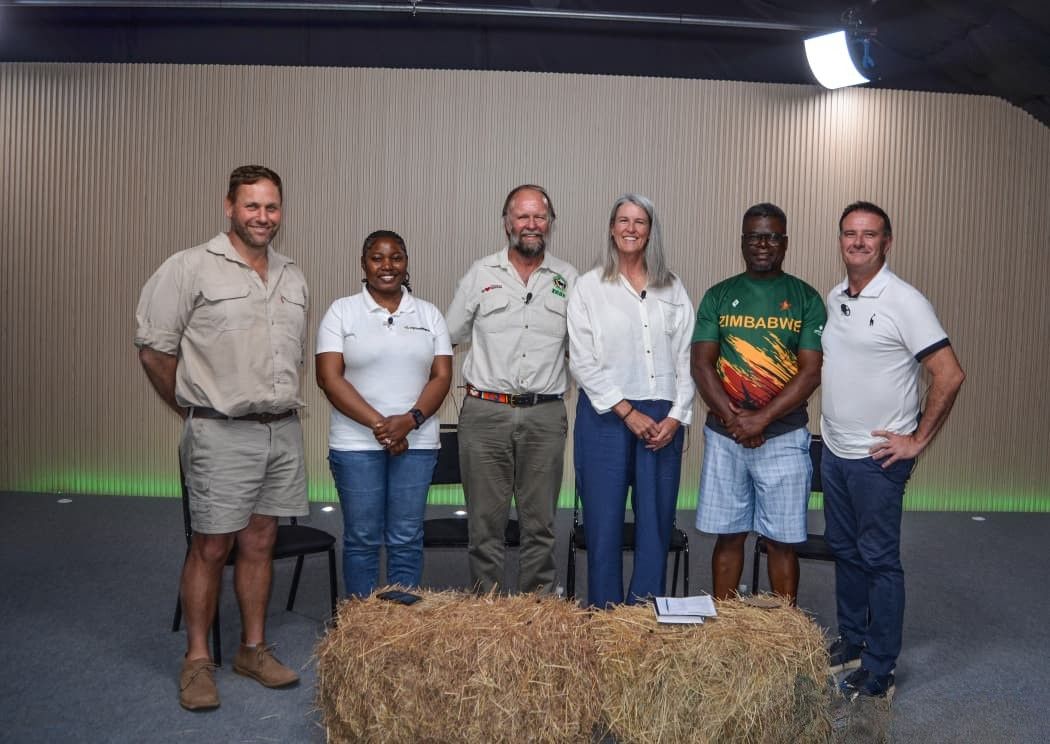
Speaking on the Agriculture.co.zw Growing Season podcast, ZHB chair Anne Cooke, Zimbabwe Boran Breeders Society chairman Mark Hook and Zimbabwe Dorper Sheep Association chairman William Hundermark highlighted the importance of understanding livestock genetics and matching animals to the farming environment and business objective.
As Hook put it, choosing cattle is a business decision. Farmers need to understand what they want to achieve, the environment in which they are farming and the resources available to them before deciding which genetics are appropriate.
An annual event, the programme brings together topical knowledge from international and regional experts with practical sessions designed to give farmers information they can apply on the farm.
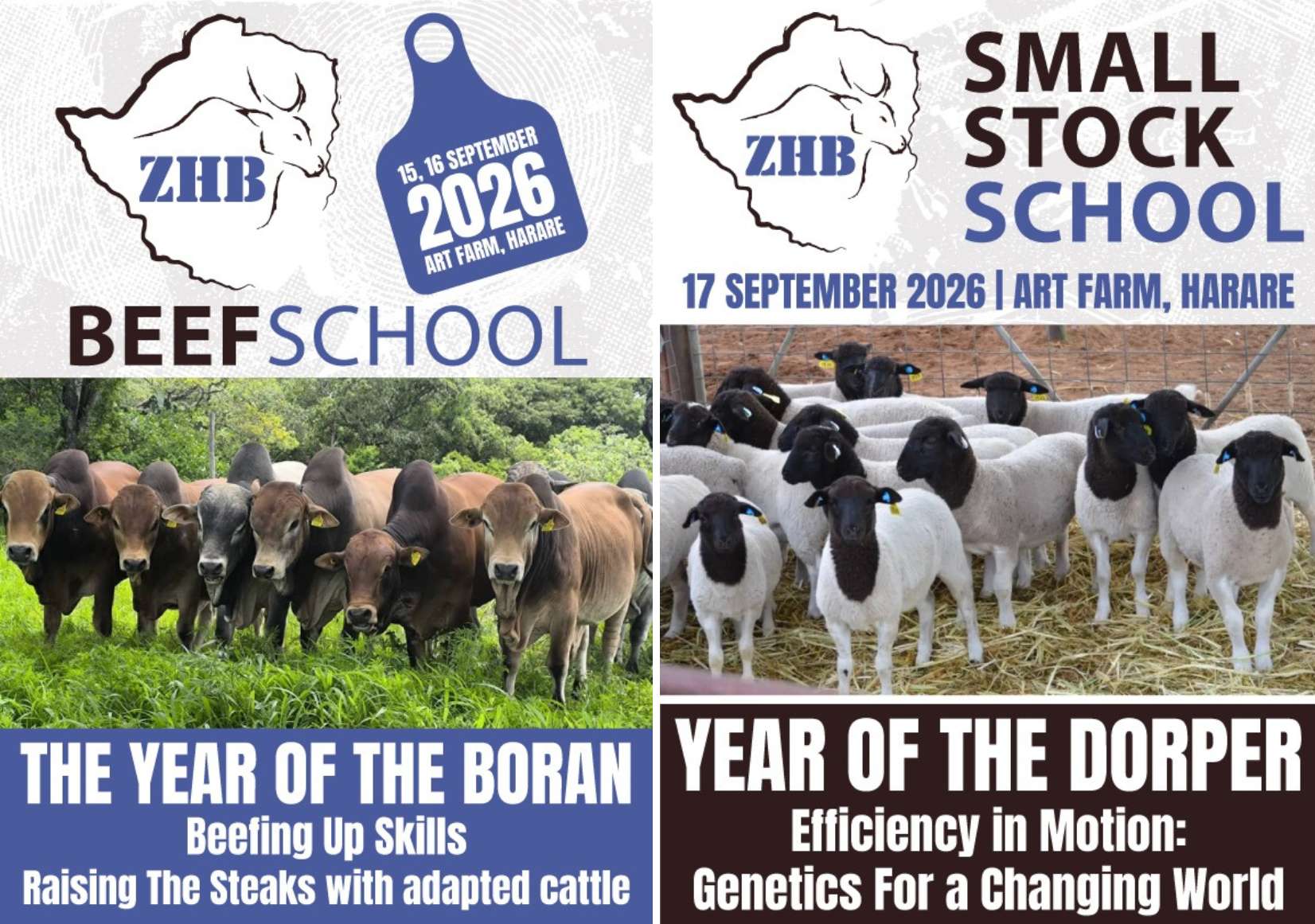
The Year of the Boran
As part of the Beef School’s annual focus on a particular breed, 2026 has been designated the Year of the Boran.
The initiative sees a different breed society take centre stage each year, highlighting its breed, characteristics and potential while educating farmers and the wider public about the range of livestock genetics available.
The Boran focus is particularly relevant to Zimbabwe’s challenging production environment, with Hook highlighting the breed’s African adaptation and suitability to difficult conditions.
Boran cattle will be on display during the Beef School, giving farmers an opportunity to see the breed at first hand. The afternoon of the first day will put the Boran firmly in the spotlight, with world-renowned livestock judge P.J. Budlerexploring Boran: The Mother Cow of Africa, Why?, before joining Pikkie Uys for Year of the Boran.
The programme will also include a meat protein market assessment by Dr Reneth Mano, followed by sessions on natural remedies, farm finances and stud breeding trends.
The message, however, is not that every farmer should buy a Boran. Rather, farmers are being encouraged to understand the genetics they already have, define what they want to achieve and select animals that fit their circumstances. As Cooke pointed out, when a farmer buys a bull, they are ultimately buying not just an animal, but genetics and those genetics can influence the herd for years to come.
Tuesday: Breeding, health and adaptability
The Beef School opens on Tuesday, 15 September, with ABRI leading a session on Selection in Practice, followed by Willem Augustyn on Fetal Programming.
The Department of Veterinary Services Chief Veterinary Officer, Dr Pious Makaya, will provide an Animal Health Update, while Pikkie Uys looks at the importance of adaptability in cattle in No Profit Without Adaptable Cattle.
After lunch, the programme moves into the Year of the Boran sessions, with Budler and Uys examining the breed, before Dr Reneth Mano looks at the meat protein market.
The afternoon continues with Dr Jan Myburgh on Bridging the Gap Using Natural Remedies and Dennis Tsondayi on Don’t Save Your Farm Broke, bringing the focus back to animal management and the financial realities of running a livestock enterprise.
The day concludes with Budler’s session on Stud Breeding Trends, followed by dinner.
Wednesday: Feeding, finance and practical skills
Wednesday, 16 September brings another full day of learning, beginning with Dr Doug Bruce on Harnessing Africa’s Cattle Potential and Willem Augustyn on Feeding to Body Condition.
These are followed by Dr Chrispen Sukume on Raw Materials and Feed Trends and Rowan Hayter on Cash Flows in Beef Cattle, bringing together the nutritional and financial aspects of running a productive herd.
The afternoon becomes firmly practical, with Lozino/Red Dane Agri Solutions demonstrating knapsacks and spray races, followed by Nemtech on electric fencing and handling facilities.
Anne Cooke will then present specifically on fixed-time AI, before Chris Cilliers discusses home mixing and Ajs Kirk looks at labour motivation.
The day concludes with the Zimbabwe Herd Book Awards.
Fertility, adaptation and practical management
The programme’s emphasis on breeding, feeding, animal health and reproduction reflects the increasing importance of fertility and adaptation in commercial cattle production.
For farmers facing heat, variable grazing and drought, the ability to maintain productive animals under local conditions is critical. At the same time, sound nutrition, animal health and reproductive management are essential if genetic potential is to translate into profitable production.
The practical nature of the programme is therefore important: rather than focusing solely on theory, the sessions are designed to address decisions farmers are making in their businesses every day.
Small Stock School expands to a full day
For the first time, the Small Stock School will have a full day dedicated to the sector on Thursday, 17 September, following its introduction as an afternoon programme last year.
Hundermark said the expanded programme is intended to look beyond a single breed and address sheep production more broadly, helping farmers understand what makes a good commercial animal, how to feed livestock appropriately and how to maintain a viable enterprise through difficult seasons.
The day begins with Willem Augustyn on Practical Sheep Feeding and William Hundermark on Practical Sheep Selection. Dr Jesse Steele will address wireworm in sheep, while Pikkie Uys looks at AI in sheep.
A sheepdog demonstration by Hundermark, follows before the Dorper Awards.
The afternoon continues with Dr Doug Bruce on practical animal health, followed by another practical knapsack and spray-race demonstration from Lozino/Red Dane Agri Solutions and a further demonstration of electric fencing and handling facilities by Nemtech.
For smaller-scale farmers, sheep can provide an opportunity to produce more livestock from limited land while creating an additional income stream. Hundermark has stressed the importance of concentrating not simply on numbers, but on consolidating existing flocks, improving genetic value and retaining productive animals capable of surviving difficult conditions.
More than just lectures
Beef and Small Stock School is as much about interaction and networking as it is about sitting through presentations.
Breed societies, breeders, veterinary companies, feed companies and other livestock input businesses will be represented, giving participants an opportunity to discuss what they have learnt directly with people working in the industry.
The organisers also want farmers to arrive with questions and clear objectives. The value of the event lies not only in the speakers, but in the practical knowledge, contacts and understanding participants can take back to their farms, whether that means making better breeding decisions, improving fertility, managing feed, handling animals more effectively or understanding the finances behind the livestock enterprise.
Attendees receive a book containing the lectures, together with additional material and a sponsor goodie bag, while lunch and supper are included.
Book now
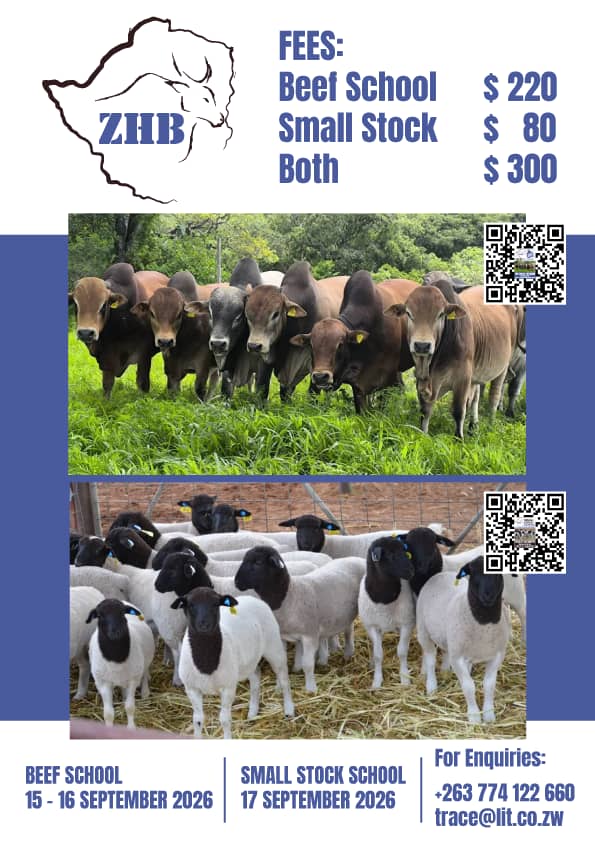
Bookings are essential. The cost is USD 220 for Beef School, USD 80 for Small Stock School, or USD 300 to attend all three days, with meals included.
In a livestock industry where genetics, fertility, adaptation and sound financial management increasingly determine whether an enterprise succeeds, three days spent learning from those already working in the sector could prove a worthwhile investment.
Farmers interested in attending should use the contact details on the Beef and Small Stock School booking flyer to secure their place.

Related Content