Green card dreams in gum boots: The untold ambitions of Zimbabwe’s rural agripreneurs
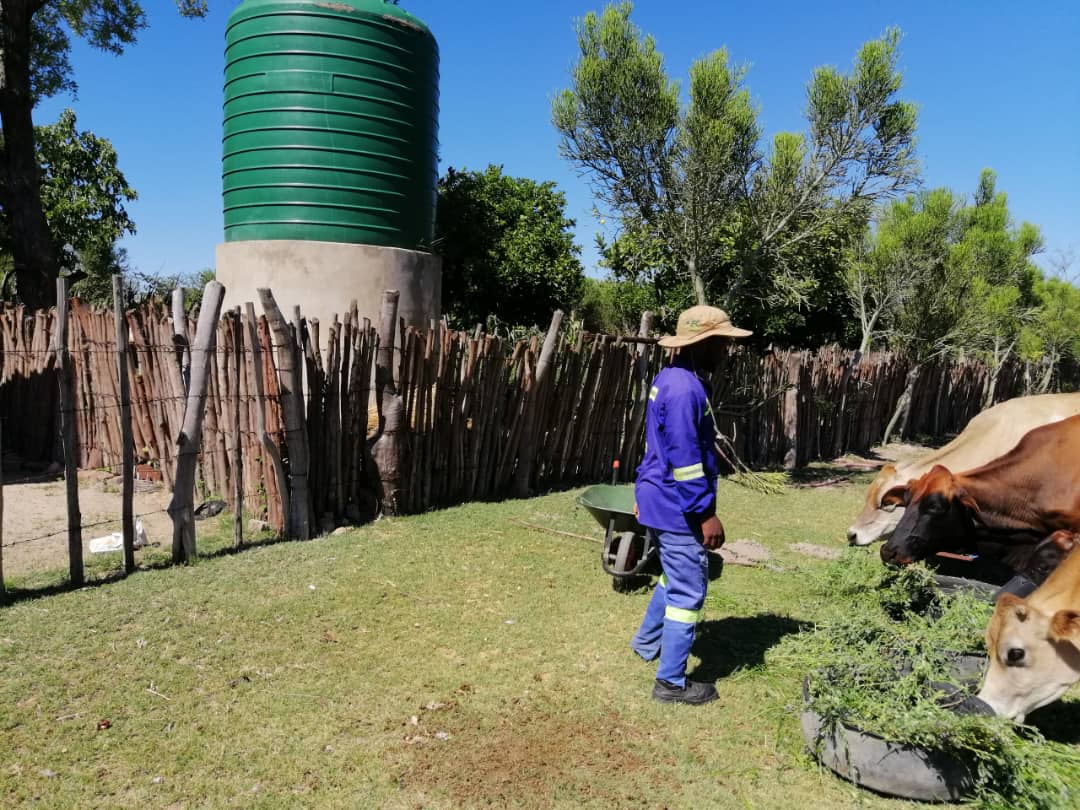
By day I’m dosing rabbits and repairing drip lines. By night I’m checking DV Lottery results. This is the double life so many of us rural agripreneurs live; rooted here, but still looking abroad.
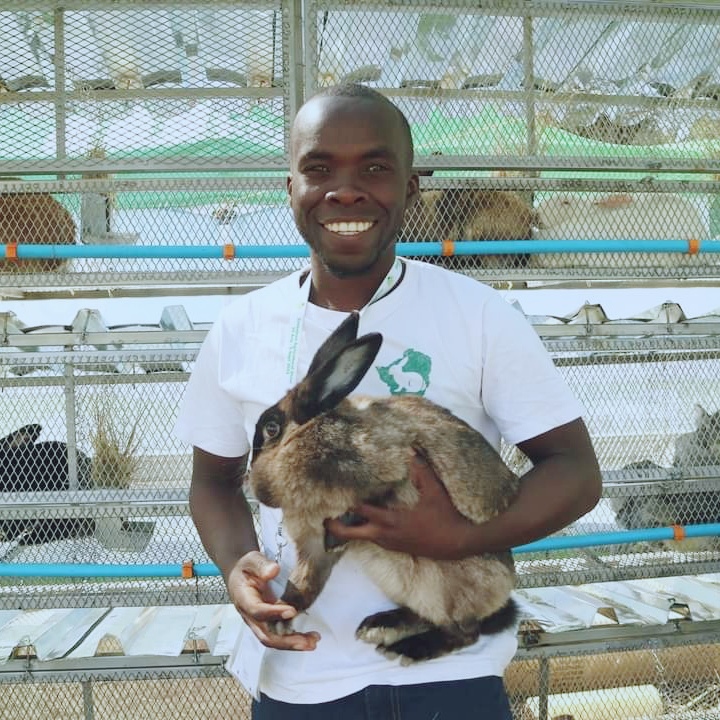
The gumboots are still wet from the morning dew. Before the sun is fully up, I’m in my rabbitry in Tagarika Village, Mvuma, weighing feed, checking newborn kits, scribbling in my notebook. The air smells of lucerne and damp earth. By 10am I’ve posted a photo to my Lemonhead Aggregation Centre page: “Entremanure at work. Building soil, building community.”
By 10pm, the gumboots are off. My phone lights up my face in the dark. I’m on the US State Department website, double-checking my Green Card Lottery confirmation number. For the fourth year in a row.
This is the double life so many of us rural agripreneurs live. We’re the faces of Pfumvudza success stories and “youth-in-ag” conference panels. We’re investing in boreholes, solar pumps, and TikTok farm content. We speak passionately about food security and value addition.
And many of us are also quietly, doggedly, applying to leave.
The paradox I live - and see everywhere
I’m not alone. Memory in Mutoko leases five hectares and runs one of the most consistent tomato operations in her ward. Last season she grossed over USD 14,000. She employs three people year-round. In July, she paid USD 300 to a Harare agent for a “guaranteed interview” for a UK care worker certificate of sponsorship.
“I’m not saying I’ll go,” she told me, wiping her hands on her chitenge. “But I need to know I can go. What if tomatoes crash next year? What if hail wipes me out? In the UK, you get paid even when it rains.”
In Binga, Paul Muleya moves among his 210 goats at sunrise. He knows each breeder by sight. His pen designs have been copied by two NGOs. His eldest daughter is in Canada on a study permit. Every week she sends him links: “Dad, Saskatchewan is taking farm workers. PR in two years.”
Paul hasn’t applied. Yet. “But I got my passport renewed,” he admits. “Just in case. You can love your goats and still want to see snow once before you die.”
These aren’t failing farmers running away. We are, by any rural measure, the successful ones. We have land, assets, market linkages, and social respect. And we are also in WhatsApp groups named “UK Health Jobs 2026,” “Australia Farm Visa,” and “DV Lottery Winners + Testimonies.”
Why the wish persists even when we’re “winning”
So why would I, or Memory, or Paul, still dream of Heathrow? After years on the land, I’ve learnt it’s less about desperation and more about arithmetic, exhaustion, and asymmetry.
- The currency treadmill.I sell rabbits in USD. But I also buy pellets, wire cages, and meds in USD. My profit margin after a good cycle is 20-25%. One disease outbreak, one input price hike, and I’m back to zero. Abroad looks, from a distance, like a place where you work, you get paid, you keep it. Here you work, you get paid, and then you pay to work again next season.
- The services gap.My rabbits are healthy. But the nearest clinic is 18km. The secondary school has no A-Level. I tell my young cousins: “Farm hard so you don’t have to farm.” For many of us, a foreign visa isn’t for us; it’s for the next generation. It’s a scholarship we apply for with our labour.
- Burnout without buffers.Farming in marginalised areas is 365 days with no HR department. There is no paid leave, no pension, no sick days. A UK care job or Australian harvest visa looks like a job with a clock-off time. Sometimes I want to work where when it’s 5pm, it’s 5pm. Here, a doe kinding at 2am is my problem.
- Social accounting.In village economies, status is complicated. A farmer who buys a second-hand truck gets respect. A neighbour’s son who sends USD 100 from Leeds gets reverence. The diaspora dollar has a social exchange rate higher than the bank rate. The message is clear: going is winning.
The hidden cost of our dual dreams
The DV Lottery is free to enter. The dream is not. It costs time, money, and focus; resources our farms can’t spare.
I’ve spent about USD 600 in three years on passport fees, bus fares to Harare for biometrics, printing documents, and “consultation” fees to agents who promise to improve my odds. USD 600 is a solar pump. It’s 20 bags of starter fertiliser. It’s a year’s school fees for two kids.
My Agritex Officer, Mrs. Dube, sees it weekly. “My best farmers, the ones who attend every training, are the first to ask me for a letter confirming they’re a farmer for their visa application. I support them, but I also wonder, who will demo the new seed variety if they go?”
There’s an emotional tax, too. It’s hard to sink a borehole when part of you is calculating how much you’d get if you sold the land instead. We live in two time zones: the slow, seasonal time of crops and the urgent, deadline-driven time of visa windows. One rewards patience. The other rewards speed.
What SACAU taught me about going abroad
This tension nearly broke me last year. Then I was shortlisted for the Southern Africa Confederation of Agricultural Unions Young Leadership Incubation Program. Through SACAU, I was trained by Andreas Hermes Akademie and that changed how I see this “abroad dream.”
Sitting with young agripreneurs from Malawi, Zambia, Namibia, and South Africa, I realised we all carried the same quiet question: Should I stay or should I go? The facilitators didn’t shame us for asking. Instead, they reframed it.
I learnt that for a farmer, going beyond the borders must not be about escape. It must be about experience and exposure that you come back and share with others. Travelling to learn new dairy models in Germany, seeing cooperative systems in Kenya, understanding agri-tech in Israel - that’s currency. But only if you reinvest it back home.
SACAU drilled into us: The goal isn’t to leave. The goal is to lead. If you go, go to gather. Go to build networks, to see what’s possible, to earn capital. Then come back and multiply it. The moment going abroad becomes the end goal, we lose. The moment it becomes an input, like fertiliser or training, we all win.
That lesson sits with me every time I check my DV results. I still apply. But I’ve stopped applying to run away. I’m applying to level up. If I get it, the plan isn’t “sell everything.” The plan is “three years, learn, save, come back and set up the outgrower scheme I’ve been sketching.”
Not leaving, but looking - with purpose now
Here’s the nuance most people miss: most of us won’t actually go.
Of the 12 farmers I speak with regularly, all have considered going abroad. Nine have active passports. Five enter the DV Lottery. Only one has a real, date-specific plan to leave. For the rest, the application is not an exit strategy. It’s a psychological backup plan. It’s hope in PDF form.
“I apply because not applying feels like accepting that this is all there will ever be,” Memory told me. “If I get the Green Card, I’ll sell and go. If I don’t, I’ll buy more seedlings. Either way, I’m moving.”
That’s “passport farming” - cultivating options the way you cultivate land. You plant maize, and you plant an application. You hope one of them yields.
And thanks to SACAU, I now ask: If it yields, what will I do with the harvest? Tafadzwa from Gokwe answered that. He ran a piggery for four years. In 2023 he took a farm worker contract in Australia. His goal: 3 years, save USD 25,000, come back and mechanise. He’s on year two. “I’m here so I can farm better there,” he told me on WhatsApp from Mildura. “Abroad is my biggest input.”
What would make us delete the DV bookmark?
Ask us what would make us stop looking abroad, and the answers are unglamorously practical.
“Functional irrigation,” says Paul. “If I knew I’d harvest every year, not just when rain comes, I’d stop looking.”
“Health insurance that works in Binga. Markets that don’t collapse in April,” says Memory. “A pension,” I say. “Something that says the system will hold me if my back gives out at 50.”
We aren’t asking for miracles. We’re asking for the things that make a job a career: predictability, services, and a sense that risk will be met with support, not ruin. Export contracts that pay in forex help. So does WiFi. One farmer in Nyanga put it bluntly: “If I can Zoom a buyer in Dubai from my field, why must I fly to Dubai to feel like I made it?”
The gumboots stay on. For now.
Tonight I’ll close the US website and plug my phone in to charge. Tomorrow I’m mixing feed at 5am. I have a school group visiting my rabbitry to learn about urban agriculture. I’ll post about it. I believe in what I’m building.
I’ll also check my confirmation number one more time before sleeping.
If I win the Green Card, who will feed my rabbits? I ask myself that and laugh. Then I answer the way SACAU taught me: I’ll train someone. I’ll set up systems. I’ll go, I’ll learn, and I’ll come back with something worth more than a visa, I’ll come back with answers.
The gumboots are by the door, caked with the red soil of Chirumhanzu. They’ll be on my feet again in five hours. For now, they wait, just like the lottery results, just like the next season, just like our country.
Full of potential. And uncertainty. And dreams that no longer have to pick one soil, as long as we commit to making both soils richer.
Tatendaishe Constantino Ukama is a rabbit farmer and founder of Lemonhead Aggregation Centre in Mvuma, Zimbabwe. He is an alumnus of the SACAU Young Leadership Incubation Program, trained by Andreas Hermes Akademie

Related Content