
Hurudza mindset: Zimbabwe does not just need bigger farms. It needs better farming systems
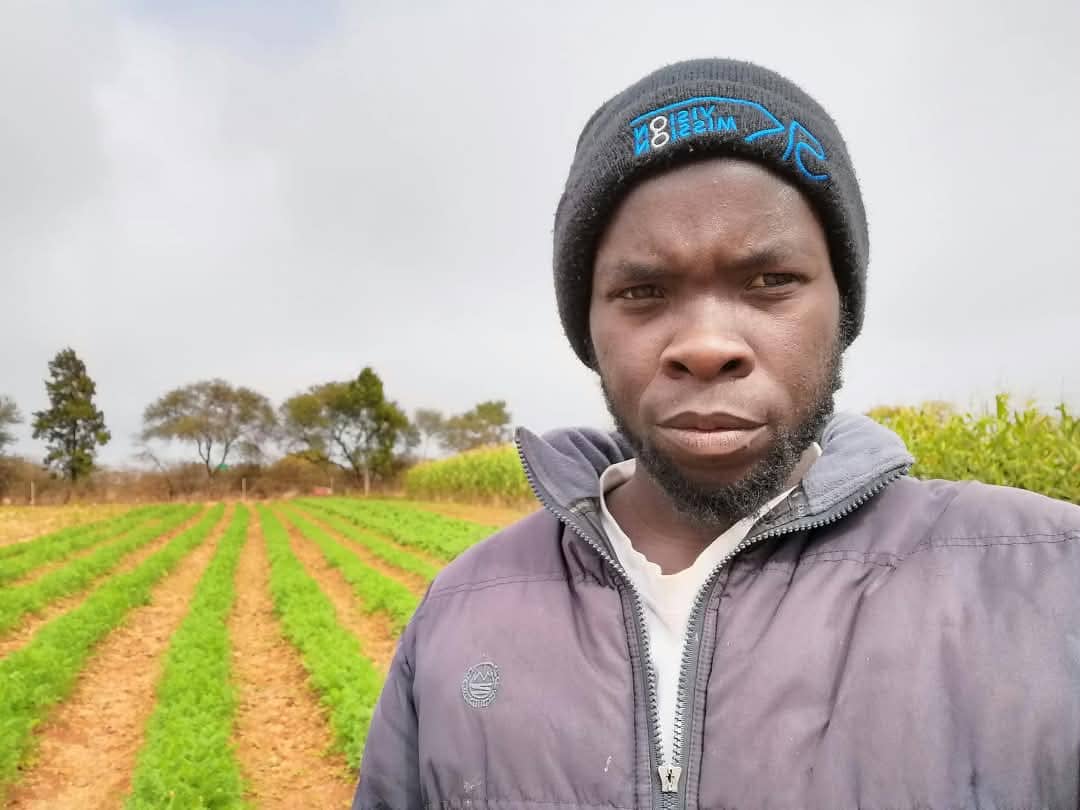
A provocative conversation about smallholder farmers, commercial agriculture, mechanisation, technology, policy, profitability and the future of Zimbabwean agriculture.
Let me ask Zimbabwe a question that might disturb a few comfortable conversations in our agricultural industry:
If two farmers produce for the market, keep records, manage costs, understand their customers and reinvest their profits, why should one be considered a serious commercial farmer simply because they own hundreds of hectares, while the other is dismissed because they farm two hectares?
And here is another question.
If a farmer owns 1,000 hectares but cannot account for production costs, loses produce after harvesting, borrows without a repayment plan and cannot explain whether the business made a profit, what exactly are we celebrating when we call that farm commercial?
Conversely, if a woman in a rural village grows vegetables on a small plot, keeps production records, uses irrigation efficiently, supplies a supermarket, pays her workers and reinvests her earnings, are we prepared to recognise her as an entrepreneur building a commercial agricultural enterprise?
This is where my Hurudza Mindset philosophy begins.
I believe that Zimbabwe's agricultural transformation must go beyond the size of our farms, the horsepower of our tractors and the number of tonnes displayed at agricultural exhibitions.
We must begin asking harder questions about the quality of our farming systems, the profitability of our enterprises, the accessibility of technology, the effectiveness of our institutions and the dignity of the people who produce our food.
A farm's size tells us something about its scale. It does not, by itself, tell us how well that farm is managed.
- Let us challenge the myth that commercial farming belongs only to the big farmer
In August 2024, Rutendo Yolanda Chibanda published an article titled The Myth of Commercial Farming through Agribusiness Media.
Her argument challenged the assumption that commercial farming is defined principally by land size. She advocated for entrepreneurial thinking, business plans, financial knowledge, risk management and proper organisational systems, even when a farmer operates on a small plot.
That is a conversation Zimbabwe needs to continue.
Read her article: https://www.agribusiness.co.zw/blog/the-myth-of-commercial-farming
I support the central idea that commercial thinking should not be reserved for farmers with large landholdings.
A poultry farmer raising 100 birds needs to understand feed conversion, mortality, vaccination costs, market prices and cash flow.
A dairy farmer with two cows needs to understand breeding, feeding, milk yields, mastitis prevention, reproduction and the cost of producing a litre of milk.
A horticultural farmer needs to know the cost of seed, fertiliser, irrigation, labour, packaging, transport and rejected produce.
A farmer producing maize on a larger scale needs to understand machinery utilisation, fuel consumption, soil fertility, storage, working capital, market timing and machinery maintenance.
The scale differs. The principles of good management remain relevant.
Of course, the equipment, staffing, accounting systems and regulatory requirements must be proportionate to the enterprise. A two-hectare farm does not need the same organisational structure as a 10,000-hectare estate.
But both need a reasoned production plan and a clear understanding of their economics.
My challenge to Zimbabwean farmers is this: stop waiting until your farm becomes large before you start managing it like a business.
My challenge to agricultural institutions is equally important: do not measure a farmer's potential solely by the number of hectares they currently control.
Help farmers build the systems that make growth possible.
- The tractor debate: Are we mechanising agriculture, or merely displaying machinery?
Zimbabwe has spoken about agricultural mechanisation for years. Tractors, combine harvesters, planters, irrigation equipment and processing machinery have become familiar features of our agricultural discussions.
The real question is not whether mechanisation matters.
It does.
The question is whether we are providing the right machinery, at the right cost, in the right place, with the right maintenance and financing arrangements.
In its 2026 National Budget, Zimbabwe's Treasury acknowledged that the high cost of modern equipment continues to put machinery beyond the reach of many farmers, particularly smallholders. The budget also discussed partnerships to strengthen mechanisation and develop local service capacity.
Read the 2026 National Budget: https://zimtreasury.co.zw/wp-content/uploads/2025/11/NEW-THE_2026-National-Budget_25_November_2025-final.pdf
This raises an important issue.
A tractor parked at a depot is not the same as a tractor preparing land on time.
A planter showcased at an agricultural exhibition is not the same as a planter available to a farmer when the planting window opens.
A combine harvester is not a complete solution if the farmer cannot afford its operating costs, access spare parts or organise transport and storage for the harvested crop.
And a mechanisation programme cannot be judged by the number of machines purchased alone. We should also ask how many farmers actually use them, how much time they save, whether production costs fall, how reliable the service is and whether the investment generates sufficient returns.
Ian Scoones, writing in The Herald on 10 January 2024, highlighted the importance of machinery suited to Zimbabwe's changing agricultural landscape. His discussion included smaller-scale technologies and the local innovation that supports production, processing and transport.
Read the article: https://www.heraldonline.co.zw/appropriate-machinery-pathway-to-boosting-agric-productivity/
This is an important reminder that agricultural modernisation is not a competition to see who owns the biggest tractor.
For one farmer, mechanisation may mean a combine harvester.
For another, it may mean a two-wheel tractor, a direct seeder, a sheller, a peanut butter machine, a water pump or a locally fabricated implement that saves days of exhausting labour.
For a livestock farmer, it may mean a chaff cutter, a feed mixer, a milking machine or improved water infrastructure.
For an agro-processor, it may mean a dryer, a mill, a cold room or a packaging line.
Mechanisation should be judged by the problem it solves, not by how impressive the machine looks.
We need large machinery where large-scale operations justify it. We also need smaller, affordable and repairable technologies that serve communal farmers, A1 and A2 farmers, smallholder enterprises and emerging commercial producers.
The future should not force us to choose between the large tractor and the small machine. It should help us match the technology to the job.
- Zimbabwe's village farmer is not waiting for the future to arrive
One of the most important conversations in agriculture is happening far beyond the boardrooms.
It is happening in villages where farmers must decide whether to hire a tractor, use an ox-drawn plough, prepare land manually, hire labour or miss the planting window.
It is happening where women carry heavy workloads, where farmers struggle to obtain reliable machinery services and where harvests can be lost because threshing, transport or storage is delayed.
In June 2025, the Food and Agriculture Organization of the United Nations published a report on mechanisation and climate-smart agriculture in Zimbabwe's drylands.
The work highlighted the role of equipment such as earth augers, two-wheel tractors, row seeders and multi-crop threshers, alongside farmer training, soil conservation and the cultivation of resilient traditional grains.
The report described work in Zaka, Masvingo Province, showing how appropriate machinery can support both productivity and sustainable land management.
Read the FAO report: https://www.fao.org/africa/news-stories/news-detail/mechanization-drives-climate-smart-agriculture-and-gender-equality-in-zimbabwe-s-drylands/
There is a lesson here for our agricultural development partners.
Farmers do not necessarily need to wait until they can purchase a machine before benefiting from mechanisation. They can access machinery through service providers, cooperatives, farmer groups and appropriately structured hiring arrangements.
A young entrepreneur with a tractor, planter and trailer can become a service provider to dozens of farmers.
A village association can organise demand, negotiate prices and schedule planting services.
A local engineering business can fabricate equipment, repair implements and supply spare parts.
A processor can offer threshing services while building a reliable supply chain for its own operations.
That is how mechanisation can become more than an equipment distribution exercise. It can become a rural business ecosystem.
In its report on the Food and Agriculture Resilience Mission Pillar 3 pilot in Zimbabwe, the International Fund for Agricultural Development described work to develop commercially viable mechanisation services for the sorghum value chain.
The project reported eight investment-ready business models and approximately USD 150,000 in co-financing, while connecting smallholder farmers with service providers and buyers.
Read the IFAD report: https://www.ifad.org/en/w/publications/food-and-agriculture-resilience-mission-pillar-3-farm-p3-zimbabwe-final-report-2025-2026
This is precisely the kind of thinking that deserves more attention.
Instead of asking only, "How many farmers own tractors?", we should also ask, "How many farmers can access affordable, reliable mechanisation when they need it?"
Ownership matters. Access matters too.
- What do our agricultural policies promise, and what should farmers experience?
Zimbabwe's National Development Strategy 2, covering 2026–2030, sets out the country's development ambitions towards Vision 2030.
Agriculture forms an important part of that wider transformation agenda.
The Food and Agriculture Organization also identifies Zimbabwe's National Development Strategy 2 and the Agriculture Food Systems and Rural Transformation Strategy as important frameworks for agrifood transformation.
Sources:
- NDS 2, United Nations in Zimbabwe: https://zimbabwe.un.org/en/306105-national-development-strategy-2
- FAO Zimbabwe overview: https://www.fao.org/zimbabwe/our-office/zimbabwe-at-a-glance/en
These frameworks matter. National planning matters. Agricultural budgets matter. Research institutions matter. Extension services matter. Public and private investment matter.
But policies must eventually become visible in the farmer's daily experience.
A farmer experiences policy when seed arrives in time for planting.
A farmer experiences policy when fertiliser is affordable and available when it is needed.
A farmer experiences policy when an extension officer provides relevant advice, when an irrigation scheme delivers water and when a machinery service arrives before the planting window closes.
A farmer experiences policy when the buyer explains grading standards, weights and deductions transparently, and when payment is made according to agreed terms.
A livestock farmer experiences policy when animal health services help protect cattle, goats, sheep and poultry from preventable diseases.
A small-scale processor experiences policy when reliable electricity, finance, packaging and market access allow a business to grow.
This is where I believe agricultural leadership must evolve.
Farmers do not experience an organogram. They experience prices, stock availability, extension services, machinery, credit, markets, inputs, technology, delays and results.
A ministry may have a department responsible for mechanisation. A development organisation may have a programme supporting climate-smart agriculture. A bank may have an agricultural lending facility. A supplier may have an extensive distribution network.
But the farmer's real question remains simple: can I access the service I need, when I need it, at a cost my enterprise can sustain?
The answer must be measured at the farm gate, not only in policy documents and conference presentations.
This is not an argument against policy. It is an argument for making policy work in practice.
- The commercial farmer debate must move from hectares to value creation
At the Zimbabwe Farmers Union meeting in Gweru, reported on 5 October 2026, Agriculture Minister Dr Anxious Masuka urged farmers to move beyond selling raw produce and to embrace aggregation, value addition and stronger participation in agricultural value chains.
He also highlighted the importance of ensuring farmers retain more of the value generated from their produce.
Read the Zimbabwe Farmers Union report: https://www.zfu.org.zw/news/farmers-must-reap-more-value-agriculture-dr-masuka
This message deserves serious engagement.
Zimbabwe cannot maximise the value of its agricultural production if farmers consistently carry the costs and risks of production while other participants capture most of the opportunities created after harvest.
Consider a farmer producing groundnuts.
The farmer may sell unshelled groundnuts immediately after harvest. Another business may shell them, grade them, roast them, package them and sell a branded product at a higher price.
The second business may create legitimate additional value through equipment, labour, quality control, packaging, distribution and market development.
But why should the farmer remain permanently confined to the lowest-value end of the chain?
Could farmer groups invest in shared shelling and grading equipment?
Could rural entrepreneurs establish small processing businesses?
Could cooperatives aggregate produce to negotiate better contracts?
Could digital platforms connect producers with buyers and reduce information gaps?
Could financial institutions fund processing equipment when a credible business plan and reliable supply agreements exist?
The same questions apply to milk, maize, soybeans, horticultural produce, poultry, cattle, small grains and many other commodities.
Value addition does not mean every farmer must become a factory owner. It means farmers should have realistic opportunities to participate in the value chain, individually or collectively, and understand where the greatest opportunities and risks lie.
And let us be careful: processing is not automatically profitable. Businesses must still calculate energy costs, transport, packaging, working capital, quality requirements and consumer demand.
The objective is not to chase every opportunity. It is to build commercially viable enterprises that retain more value locally.
- Digital agriculture: Is technology only for mega-farms?
Zimbabwe's agricultural future will increasingly involve digital information, precision farming, satellite monitoring, weather services, mobile platforms and data-informed decisions.
But there is a danger that we may confuse advanced technology with expensive technology.
A farmer with a smartphone who records daily milk production, feed purchases, breeding dates and veterinary costs is already using digital tools to improve management.
A poultry farmer who tracks feed consumption, mortality and sales in a spreadsheet is building a better understanding of the business.
A commercial grain producer who uses satellite imagery, soil data and prescription maps may be able to target inputs more accurately.
An irrigation farmer who uses weather information and soil-moisture measurements can make better-informed decisions about when to irrigate.
These are different levels of technology, but they all serve the same purpose: improving decisions.
In March 2026, the United Nations University Institute for Water, Environment and Health published a policy brief on digital agriculture and AI for climate-resilient smallholder farming in Zimbabwe, developed with research partners and Zimbabwe's Ministry of Lands, Agriculture, Fisheries, Water and Rural Development.
The brief examined how digital technologies and artificial intelligence could strengthen smallholder productivity and climate resilience.
Read the publication: https://unu.edu/inweh/news/digital-technologies-and-ai-can-strengthen-agricultural-systems-and-improve-climate
The challenge is to make such tools useful and accessible.
A farmer should not need to understand every technical detail of artificial intelligence to benefit from a practical recommendation about crop monitoring, weather risk or input planning.
However, technology is not magic. Digital tools must be affordable, relevant to local conditions and supported by reliable information, farmer training and, where necessary, human agronomic advice.
For a farmer with limited connectivity, a simple SMS advisory may be more useful than an elaborate application.
For a farmer managing hundreds of hectares, satellite monitoring and precision application may provide valuable efficiencies.
For a large agricultural enterprise, integrated farm-management systems may support planning across machinery, labour, inventory, production and marketing.
The question is not whether every farmer should use the same technology. The question is whether every farmer can access the level of technology that creates practical value for their enterprise.
Hurudza Mindset sees digital agriculture not as a replacement for the farmer's knowledge, but as a way to strengthen that knowledge with better information.
- Small farms, medium farms, large farms and mega-farms need one another
Let us stop turning farm size into a contest of superiority.
Smallholder farmers can supply local markets, produce diverse foods, rear livestock, develop horticultural enterprises and participate in organised value chains.
Medium-scale farmers can expand production, employ workers, invest in irrigation, operate machinery and aggregate produce from surrounding farmers.
Large-scale farms can support substantial production volumes, specialised machinery, structured procurement, processing and export supply chains where their business models are viable.
Mega-scale agricultural operations can contribute significant volumes, infrastructure and investment in appropriate contexts. They also face substantial capital requirements, management complexity, environmental responsibilities and market risks.
No scale guarantees success.
No scale eliminates the need for sound agronomy, financial discipline, reliable markets and responsible management.
Nor should we assume that all farmers must follow one path. Some will remain small and profitable. Others will expand. Some will specialise in production, while others will focus on services, processing, logistics or marketing.
Zimbabwe needs an agricultural ecosystem in which different scales complement one another.
Imagine a district where a smallholder produces sorghum, a local entrepreneur provides planting and threshing services, a cooperative aggregates grain, a processor turns it into flour, a transporter delivers it to retailers and a financial institution supports the enterprises.
That is not simply farming. It is a rural economy.
And every link must work for the system to succeed.
- Let us talk honestly about farmer profitability
We often celebrate hectares planted, tonnes harvested, tractors distributed and agricultural projects launched.
These indicators can be useful, but they do not tell the whole story.
How much did it cost to produce each tonne?
How much of the harvest reached the intended market?
How long did the farmer wait to be paid?
What percentage of produce was rejected or lost?
How much income remained after inputs, labour, fuel, electricity, transport, finance and maintenance?
Could the farmer afford to prepare for the next season without falling into unsustainable debt?
Did the farming enterprise improve the household's living conditions while protecting its productive assets?
These are not questions designed to discourage farmers. They are questions designed to help farming businesses survive.
A farm can record a large harvest and still struggle financially if costs are too high or the market price is inadequate.
A smaller operation may produce less but achieve stronger returns per hectare through careful crop selection, efficient resource use and dependable buyers.
Both production volume and profitability matter. So do resilience, food security, soil health and long-term productivity.
My position is straightforward: we must celebrate production while becoming equally serious about the economics behind it.
We must teach farmers how to calculate gross margins, manage cash flow, record transactions, assess risk, compare technologies and make evidence-based investment decisions.
A farmer who understands the numbers is better positioned to question a poor offer, negotiate with a buyer and decide whether an expansion is justified.
That is agricultural empowerment.
- The agricultural extension officer, the researcher and the farmer must become partners
Knowledge must not flow in only one direction.
Researchers possess scientific knowledge. Extension officers understand agricultural practices and local production challenges. Farmers possess experience accumulated through seasons of observation, experimentation, success and failure.
Machinery manufacturers understand engineering. Agro-dealers understand input distribution. Financial institutions understand lending requirements. Processors understand quality specifications and consumer demand.
When these groups work separately, valuable information can be lost between research and practice.
When they work together, they can test solutions, identify constraints and improve farming systems.
A farmer who reports waterlogging in a wheat field is providing useful evidence about drainage, soil conditions, crop establishment and management.
A dairy farmer who documents repeated feed shortages is highlighting a production-system problem that may involve forage planning, storage, finance and seasonal management.
A machinery operator who reports that an implement is unsuitable for a particular soil type is providing feedback that can improve equipment design and selection.
These observations should not be dismissed simply because they did not originate in a laboratory or boardroom.
They should be investigated, tested and connected with scientific knowledge.
Likewise, farmers should remain open to research findings, new technologies and practices that improve productivity and sustainability.
The future belongs to agricultural systems where practical experience and scientific evidence strengthen one another.
- The agricultural industry must also value the people doing the work
We cannot speak about agricultural transformation while ignoring the human beings who make production possible.
Farmers, farm workers, machinery operators, extension officers, veterinary personnel, transporters and agro-processing workers all contribute to the food system.
Mechanisation should reduce unnecessary physical strain, improve safety and help people perform tasks more efficiently. It should not become an excuse to overlook worker welfare.
Commercialisation should create opportunities for better incomes and more productive employment. It should not be measured only by the wealth of the business owner.
Agricultural leadership should build confidence, develop people's skills, encourage initiative and create working environments where responsibilities, payments and expectations are communicated clearly.
A profitable agricultural business and a responsible workplace should not be treated as opposing goals.
The long-term strength of agriculture depends on productive land, sound management, appropriate technology, reliable markets and people who can work with dignity.
For Hurudza Mindset, this is not a side conversation. It is part of what agricultural progress means.
- My challenge to Zimbabwe's agricultural institutions
To policymakers: let us examine how agricultural policies are experienced at village, ward and district level, not only how they are written.
To financial institutions: develop products that recognise the different cash-flow patterns, production cycles and risks of smallholder, medium-scale and large-scale agricultural enterprises.
To machinery suppliers: consider affordability, service access, spare parts, operator training and local repair capacity alongside the sale of equipment.
To technology developers: make digital tools understandable, useful and relevant to the farmer's actual decisions.
To researchers and universities: continue connecting scientific research with practical farming problems, including those identified by farmers themselves.
To farmer organisations: strengthen aggregation, market information, business training and the ability of farmers to negotiate collectively.
To agro-dealers and input suppliers: recognise that trust is built through accurate advice, reliable products, transparent pricing and dependable service.
To processors and buyers: create transparent grading systems, communicate quality requirements and build supply relationships that reward reliable production.
To farmers: keep records, seek knowledge, manage costs, protect your soil, invest carefully and treat your farming enterprise as something that deserves disciplined management.
And to agricultural leaders everywhere: measure your success not only by the size of the programme you manage, but also by the productive capacity you help other people build.
- The Hurudza Mindset philosophy: A new way of measuring agricultural progress
I come from the farming world where agriculture is not an abstract conversation.
It is land that must be prepared, seed that must germinate, livestock that must be fed, water that must be managed and families that depend on the results.
From smallholder farming to large commercial enterprises, the fundamental challenge is to organise resources, knowledge, people and markets in ways that create lasting value.
Hurudza Mindset is not an argument against large farms, tractors, industrial agriculture or advanced technology.
It is a call to use them intelligently.
It is not an argument that every small farm will become profitable simply by changing its attitude.
Farmers need land, finance, infrastructure, knowledge, technology, fair market opportunities and institutions that work.
Mindset alone cannot solve structural barriers. But without sound management and a willingness to learn, even valuable resources can be poorly used.
We need both enabling conditions and capable farmers.
We need both public investment and private enterprise.
We need both traditional knowledge and scientific innovation.
We need both production and profitability.
We need both mechanisation and appropriate human skills.
We need both food security and the ability of agricultural households to earn a dignified living.
And we need both the smallholder farmer who feeds a family and the large-scale producer who supplies an industrial value chain.
The future of Zimbabwean agriculture will not be determined by hectares alone. It will be shaped by how intelligently we connect land, labour, machinery, technology, finance, knowledge and markets.
That is the conversation I want Hurudza Mindset to advance.
Not a conversation that humiliates the small farmer or glorifies the big farmer.
Not a conversation that celebrates technology without asking who can access it.
Not a conversation that celebrates harvests without asking whether farmers made money.
Not a conversation that quotes policies without examining what happens when those policies reach the field.
A conversation about building an agricultural economy where farmers can produce efficiently, trade fairly, manage risk, add value, protect their resources and improve their lives.
Because the ultimate purpose of agriculture is not merely to produce more.
It is to turn productive effort into food, opportunity, resilience, profitability and human dignity.
My final question to Zimbabwe is this: Are we building an agricultural industry that merely produces more, or one that enables more farmers to prosper from what they produce?
Let us debate it with evidence, experience and solutions.
Let us challenge one another without belittling one another.
Let us build an agriculture where innovation is not confined to the biggest farms, commercial thinking is not reserved for the wealthiest farmers, and progress is measured by more than machinery on display.
Hurudza Mindset: Think beyond the field. Build the system. Grow the value. Protect the farmer's dignity.
By Tatendaishe C. Ukama
Hurudza Mindset | Farmer and Writer
#HurudzaMindset #ZimbabweAgriculture #AgriculturalMechanisation #SmallholderFarmers #CommercialFarming #AgTech #PrecisionAgriculture #FarmProfitability #FoodSecurity #AgriculturalTransformation


Related Content


