Global tobacco leaf market returns to oversupply as growers face renewed pricing pressure

The global tobacco leaf market has entered a new period of adjustment, with increased production, rising costs and changing buying patterns creating fresh challenges for growers around the world.
This was the key message delivered by Ivan Genov, Manager of Analysis at the International Tobacco Growers Association (ITGA), during his presentation at the Zimbabwe Tobacco Association (ZTA) 66th Annual Congress on Thursday.
Against the backdrop of Zimbabwe’s own season, marked by a large crop and continued pressure from high costs of production, Genov provided delegates with an overview of global leaf trends, examining supply and demand, major producing countries and the outlook for tobacco consumption.
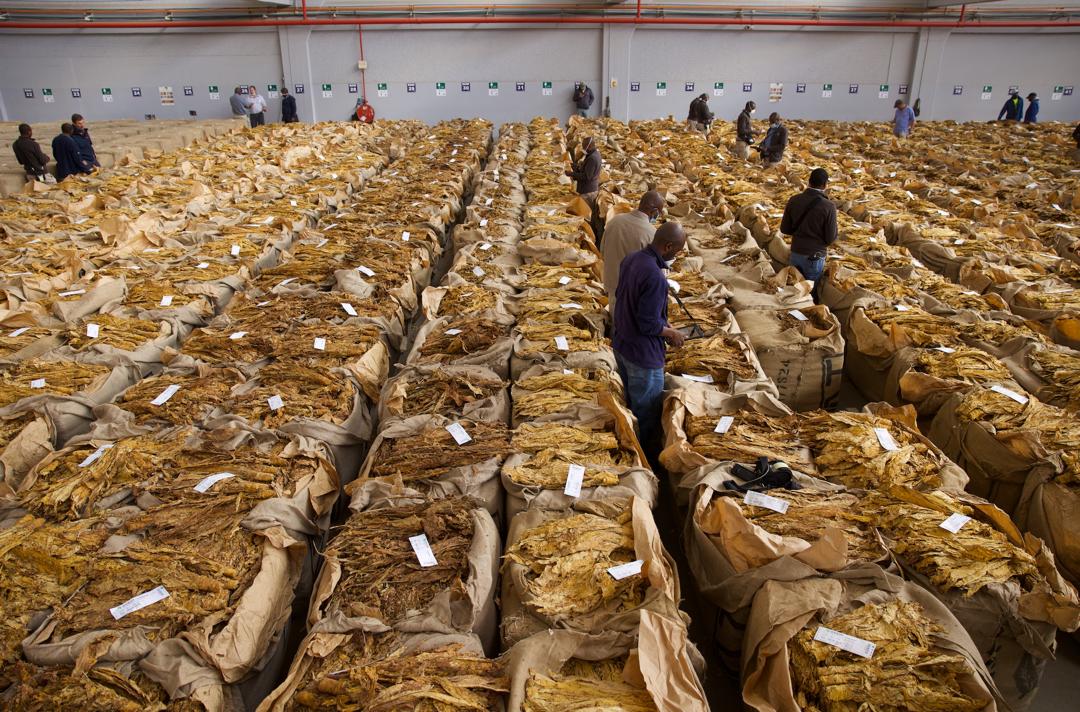
His presentation highlighted a significant shift in the global market: after several seasons of tight supply and strong prices, production has expanded rapidly and the balance between supply and demand has changed.
Global production expands rapidly
Genov explained that production of the four major tobacco types (flue-cured Virginia (FCV), burley, oriental and dark air-cured tobacco) has increased significantly over the past two seasons.
The strongest growth has been seen in flue-cured Virginia and burley production. Compared with 2022, global FCV production in 2025 was approximately 45 percent higher, while burley production more than doubled.
Africa has played a major role in this expansion, with Zimbabwe, Malawi and Tanzania all increasing output, while Brazil continues to be a significant contributor from South America.
However, while increased production has ensured that manufacturers have sufficient supply, it has also changed the market dynamic.
The pressure facing growers is not simply about demand disappearing, but rather about more tobacco being available than the market currently requires.
Rising costs add pressure to profitability
The increase in production has come at a time when growers are facing escalating input costs.
Genov highlighted that geopolitical uncertainty, including conflicts and global trade tensions, has contributed to increased costs for fuel, fertiliser, logistics and other key agricultural inputs.
For producers, this creates a difficult equation: higher production costs combined with a market where buyers have greater choice.
The challenge is therefore maintaining profitability in an environment where producing more does not necessarily guarantee stronger returns.
China’s changing role in global demand
One of the most significant developments in the international market has been a slowdown in Chinese tobacco purchasing.
China remains the world’s largest tobacco producer, accounting for more than 40 percent of global flue-cured Virginia production, and its buying decisions have a major influence on international markets.
Genov indicated that Chinese companies appear to have accumulated sufficient inventories and are now reassessing their future purchasing strategies.
This change is being observed across several origins, including Africa, the Americas and the United States.
For growers, any prolonged reduction in Chinese buying activity will remain a key factor influencing global leaf demand.
Brazil
Brazil continues to be the world’s largest exporter of tobacco leaf and remains an important indicator of global market conditions.
Despite producing large crops in recent seasons, Brazilian growers have experienced a decline from the exceptionally strong prices achieved in 2024.
While FCV prices have shown some recovery, other tobacco categories, including burley, continue to experience downward pressure.
Genov highlighted that Brazil’s highly developed tobacco sector, which is built on investment in sustainability, research and efficiency, remains competitive, but rising production costs are becoming an increasing concern.
India moves to control supply
India is also responding to market pressures.
Reduced cigarette demand following tax increases has affected flue-cured Virginia demand, particularly in Karnataka, resulting in increased stocks and pressure on auction prices.
In response, the Tobacco Board has reduced authorised production levels for the 2026 season, cutting combined production limits in Andhra Pradesh and Karnataka from 267 million kg to 198 million kg.
The move reflects a wider global trend: producing countries are increasingly looking at supply management as a way of restoring market balance.
Africa’s expansion creates opportunities and risks
Tanzania’s rapid production growth was highlighted as another example of the changing global landscape.
The country has expanded production from approximately 60 million kg in 2022 to close to 200 million kg today, with ambitions for further growth.
However, larger production volumes have also brought challenges, with growers experiencing weaker prices due to increased supply and stronger competition among sellers.
The experience demonstrates the importance of aligning production growth with actual market demand.
Leaf merchants confirm oversupply
The world’s two largest international leaf merchants, British American Tobacco and Philip Morris International, have both recognised that the global tobacco market has moved back into oversupply.
Universal Leaf Tobacco, the third-party supplier to BAT, has reported oversupply in FCV, burley and some dark air-cured tobaccos, while oriental tobacco has returned to a more balanced position.
Alliance One, one of PMI’s primary global suppliers, has similarly identified increased production in Africa and South America as a major factor behind the current imbalance.
However, both companies have emphasised that manufacturer demand for tobacco leaf remains stable.
The current market challenge is therefore not collapsing demand, but rather an excess of available leaf.
Manufacturers continue transition towards new products
Genov also outlined the continuing transformation within the global tobacco manufacturing sector.
Major companies are investing heavily in reduced-risk products, including heated tobacco, vaping and oral nicotine products.
For companies such as Philip Morris International and British American Tobacco, these alternative categories are becoming an increasingly important part of their businesses.
However, conventional cigarettes remain the dominant driver of global tobacco consumption and continue to represent the majority of demand.
Cigarettes remain the foundation of global leaf demand
Despite the growth of alternative nicotine products, Genov noted that cigarettes remain the central component of global tobacco consumption.
Consumption forecasts indicate that cigarettes will continue to dominate in most regions, with Africa and the Middle East among the few areas expected to show growth.
China remains the largest cigarette market in the world, with approximately 2.4 trillion cigarettes consumed annually and around 350 million smokers.
While alternative products are gaining ground in some markets, traditional cigarettes will continue to influence tobacco leaf demand for many years.
The road ahead for growers
According to Genov’s presentation, for tobacco-producing countries, including Zimbabwe, the industry is not facing a disappearance of demand, but rather a period where supply must realign with market requirements.
For growers, the focus will increasingly need to be on efficiency, cost management, sustainability and producing the quality leaf demanded by international buyers.
Zimbabwe enters this environment from a position of strength, with a reputation for producing some of the world’s finest flue-cured tobacco. However, as global markets become more competitive, maintaining profitability will require careful attention to production decisions and market signals.
The challenge ahead is about producing the right tobacco, efficiently and sustainably, for a changing global market.






Related Content