
Regenerative vs conventional cropping: What three years of trials reveal

By Hugo Winkfield, ART Farm
As Zimbabwe’s commercial agriculture sector seeks to remain both profitable and sustainable, regenerative agriculture has emerged as a potential pathway forward. But can regenerative systems truly compete with conventional high-input cropping, especially under Zimbabwean conditions?
A three-year independent evaluation at ART Farm in Harare set out to answer this question by comparing regenerative and conventional maize–wheat–soya systems under both irrigated and rain-fed conditions.
The trial
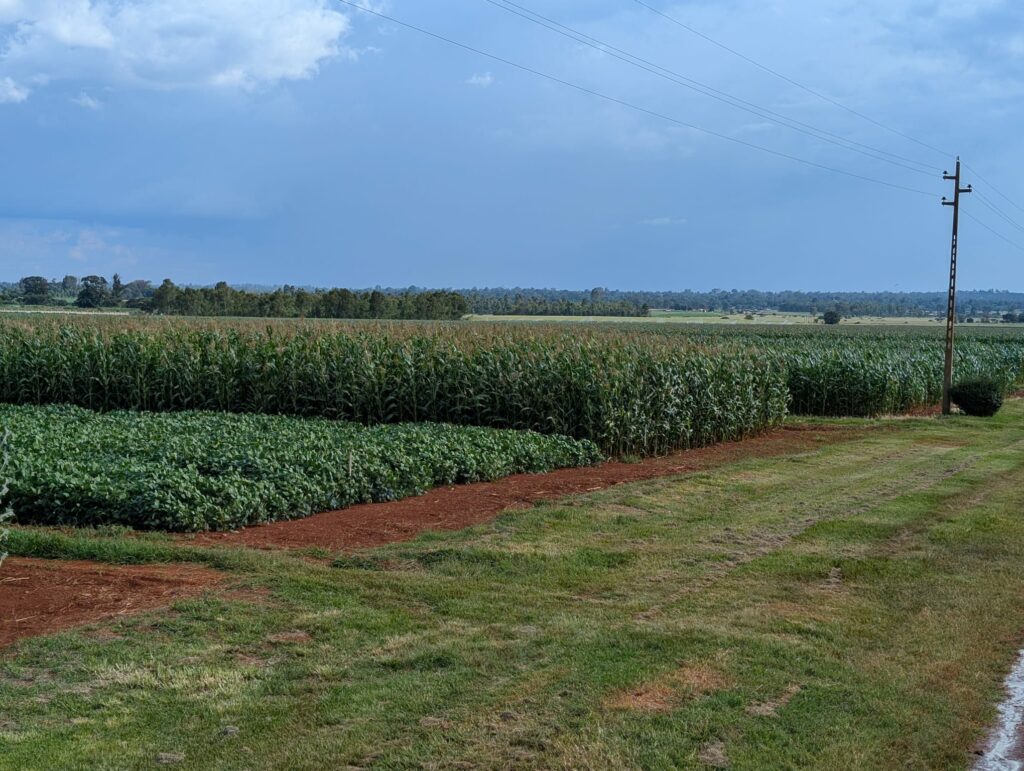
The long-term experiment, supported by the Agricultural Partnerships Trust and Oak Foundation, ran from Winter 2022 to Summer 2024/5 on red clay loam soils in Agroecological Region IIb.
Five systems were evaluated:
- Conventional irrigated rotation (maize–wheat–soya–wheat, full tillage)
- Regenerative irrigated systems incorporating no-till/strip-till and multi-species winter or summer cover crops
- Conventional rain-fedmaize–soya rotation
- Regenerative rain-fed rotation including a cover crop
In regenerative systems, cover crops replaced a cash crop because there is no available “gap” in the traditional maize–wheat–soya calendar to grow a true cover crop without sacrificing production.
In the final two seasons, fertiliser rates were also split into full and reduced applications to assess input efficiency.
The trial measured yield, fertiliser response, and, critically, gross profit.
Irrigated systems: Yield gains and input reductions
Under irrigation, regenerative systems demonstrated clear agronomic benefits over the three-year period.
Most notably:
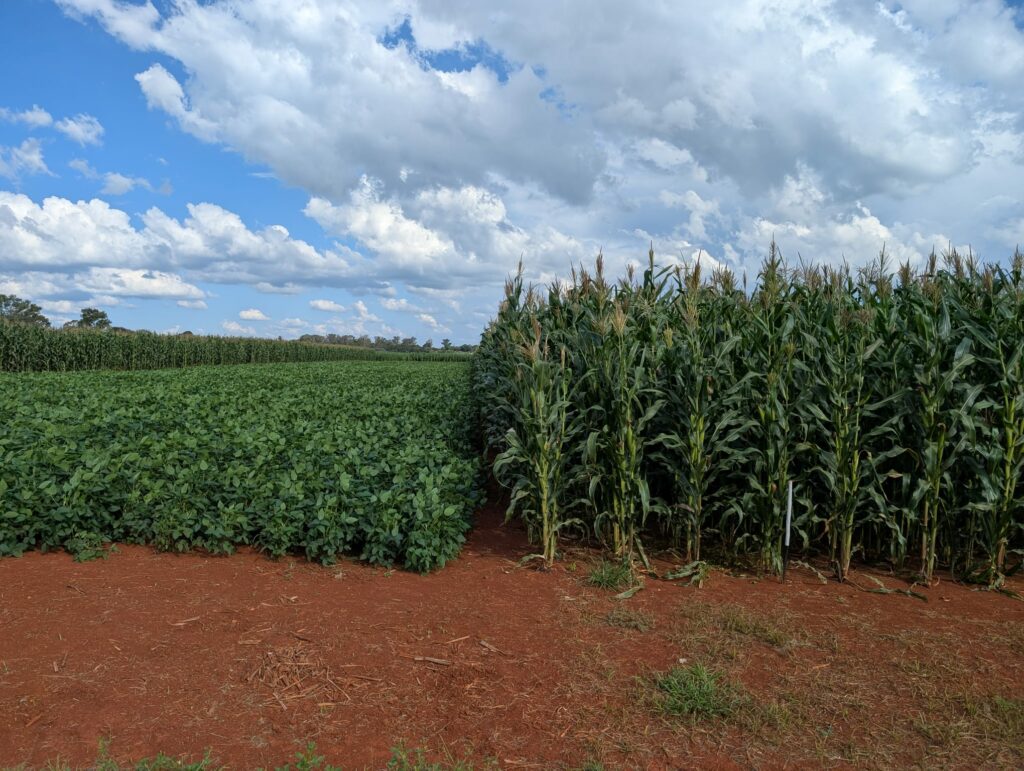
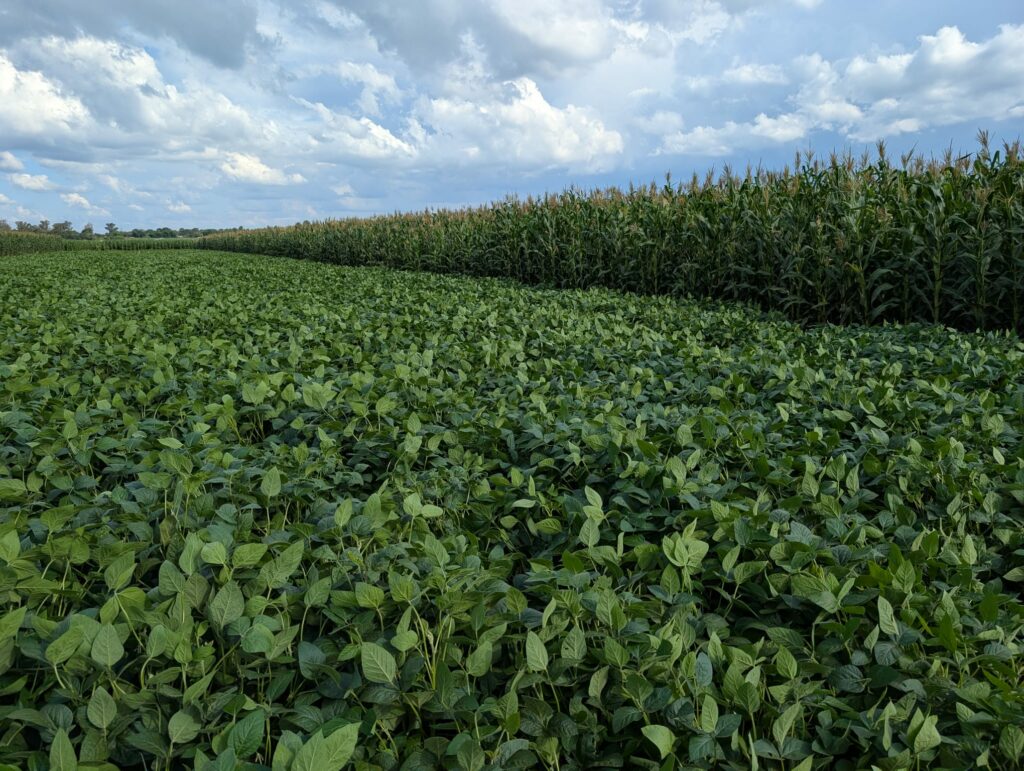
- Soyabean yields in 2023/4 increased by 66% under regenerative winter cover cropping (4.79 t/ha vs 2.89 t/ha conventional).
- Wheat and maize yields generally matched or exceeded conventional systems, depending on rotation sequence.
- Reduced fertiliser rates performed as well as - and in some cases better than - full rates in regenerative systems, indicating improved nutrient cycling and soil function.
These results suggest regenerative principles including no-till, crop diversity, and cover crops, can enhance soil biological processes sufficiently to substitute for some synthetic inputs under irrigation.
However, performance depended heavily on crop sequence. Wheat planted after heavy residue sometimes underperformed due to nitrogen immobilisation, while wheat following maize performed strongly.
The profitability challenge
Despite yield improvements, profitability told a more cautious story.
Because cover crops replaced cash crops, regenerative systems produced no direct income in cover crop seasons. While livestock grazing partially offset this through feed savings (approximately 1,441 animal unit days per hectare), the financial value of improved cattle condition and reproduction could not be fully quantified.
Over three years:
- Conventional irrigated system gross profit: USD 7,490
- Regenerative (summer cover): USD 5,030
- Regenerative (winter cover): USD 5,210
Although regenerative systems showed improving performance by Year 3 - with stronger yields and reduced fertiliser requirements — cumulative profits remained lower within the trial period.
Evidence from comparable long-term trials internationally suggests profitability may surpass conventional systems after 4–6 years, but this timeframe presents a significant barrier in Zimbabwe’s commercial context, particularly given land tenure uncertainty and capital constraints.
The key recommendation:
Winter cover crops are only financially viable if livestock integration can meaningfully offset the loss of a cash cereal crop.
Without livestock, replacing a winter cereal with a cover crop is unlikely to be feasible for most medium- to large-scale commercial farmers.
Rain-fed systems: No clear advantage
The rain-fed results were less encouraging.
Regenerative practices did not improve yields within the three-year period. In some seasons, conventional maize outperformed regenerative systems.
Financially, the regenerative rain-fed system was significantly weaker:
- Conventional gross profit (3 years): USD 4,626
- Regenerative gross profit: USD 1,715
The summer cover crop failed to generate sufficient yield benefit in subsequent crops to compensate for the lost production year.
Additionally, direct grazing benefits are lower in summer when natural pasture is already available. Silage production may improve returns, but this changes the system’s economics.
Based on three years of data, it is not recommended to replace a rain-fed cash crop with a summer cover crop under similar conditions.
What this means for Zimbabwean farmers
The results show that regenerative agriculture is not a simple replacement model, rather, it is a long-term transition strategy.
Under irrigation, regenerative systems:
- Improve yields (especially soyabeans)
- Enable fertiliser reductions
- Improve soil function over time
But profitability requires:
- Livestock integration
- A longer investment horizon
- Strong risk tolerance
Under rain-fed conditions, the regenerative approach tested here did not produce yield or profit advantages within three years.
The way forward
Future research should focus on regenerative strategies that do not require sacrificing a full cash crop. Promising directions include:
- Intercropping (cash crop plus soil-building species)
- Biological soil amendments
- Targeted fertiliser optimisation
- Improved species selection in cover crop mixes
The central challenge remains clear:
Soil health improvements must occur alongside - not at the expense of - farm profitability.
Regenerative agriculture holds promise, particularly under irrigation and with livestock integration. But for Zimbabwe’s commercial farmers, economic viability remains the decisive factor.
* Please note the full report is available for reading and download on ART Farm’s website https://artfarm.co.zw/wp-content/uploads/2026/01/Long-term-intensive-cropping-systems-Report.pdf

Related Content


