
Data-driven cattle breeding: Transforming century-old operations through systematic measurement
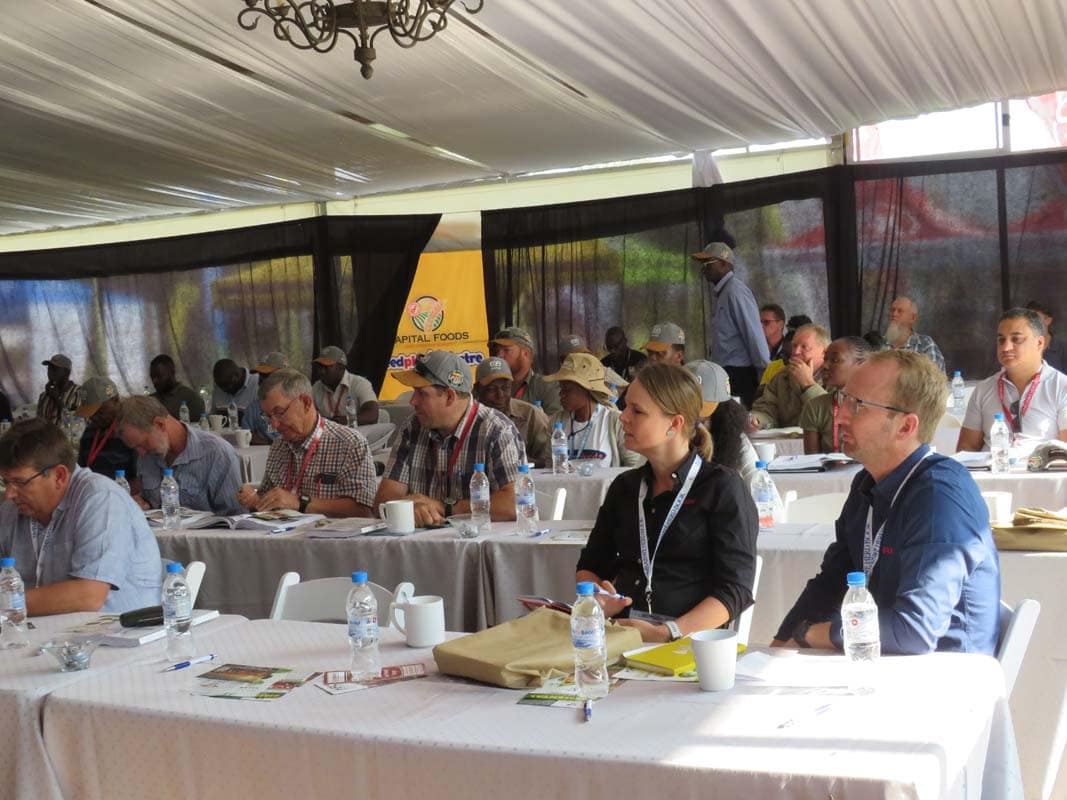
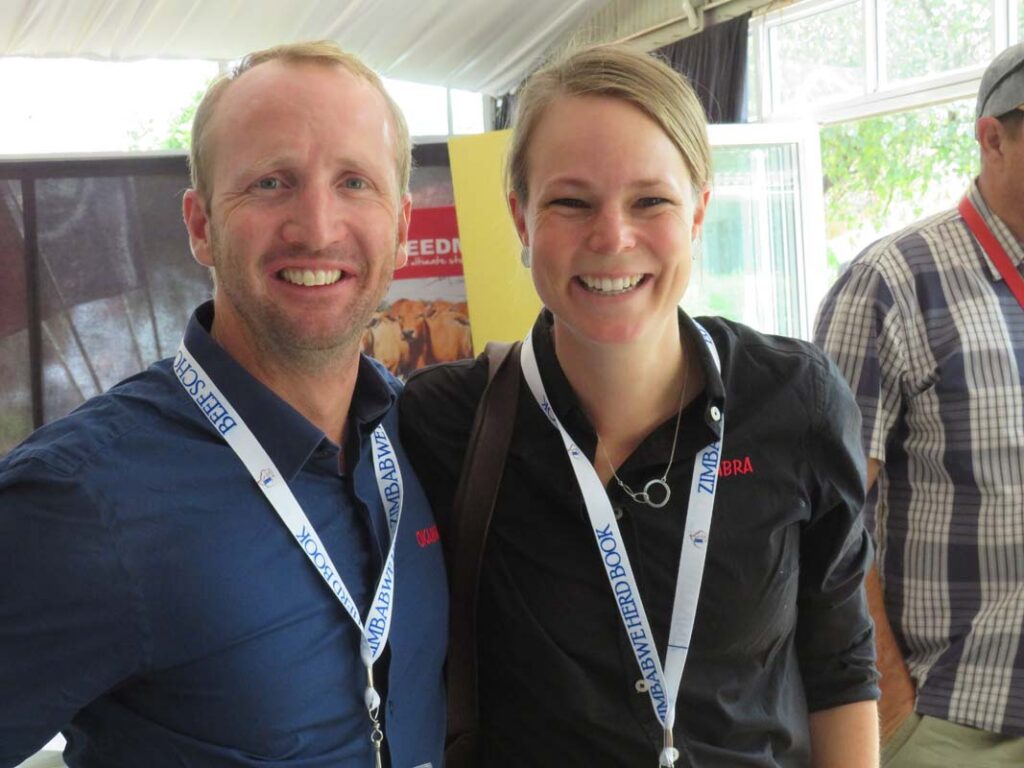
Based on a presentation by Sonja Schneider at the 2025 Zimbabwe Herd Book Beef School
About Okamutombe Farm
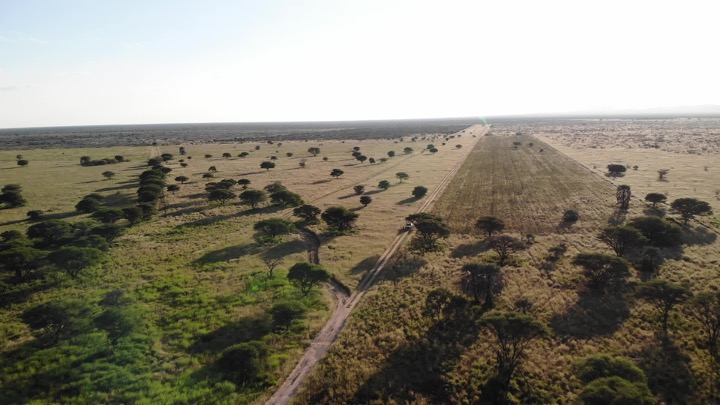
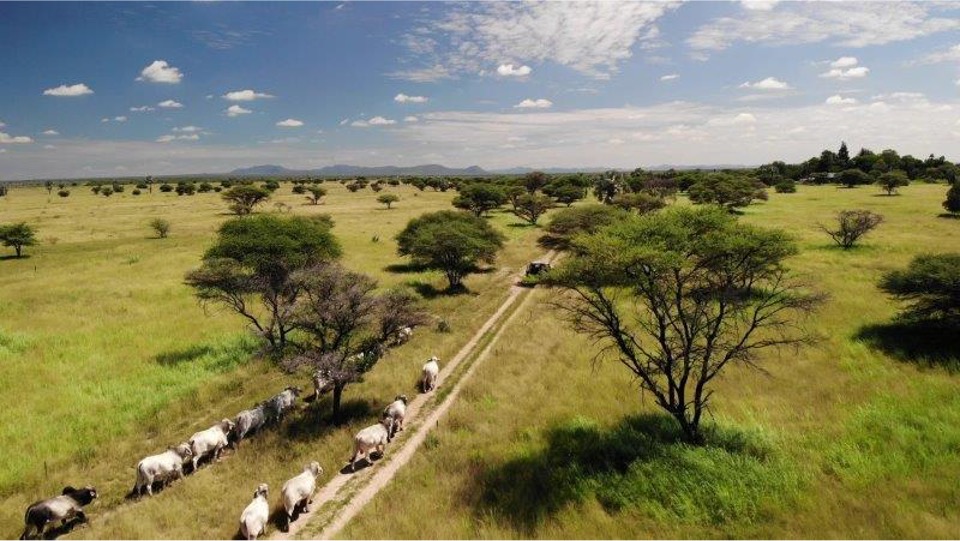
Operating in Namibia's challenging 410mm median rainfall environment, the Schneider family has maintained successful cattle farming at Okamutombe Farm since 1912. Today, they run one of Africa's largest Brahman studs alongside a substantial commercial herd producing oxen and EU-export beef.
For nearly 40 years, they've specialised in breeding Brahman and Simmentaler cattle, producing genetics for operations throughout Southern Africa. Their breeding philosophy unites both breeds' strengths to excel in three areas: veld-adaptation for harsh conditions, fertility as the primary profit driver, and efficiency in feed conversion and growth. This approach is fundamentally data and technology-driven, with unwavering focus on measurable profitability rather than aesthetic appeal.
Sonja Schneider's presentation began with a fundamental principle: "To measure is to know." This reflects a profound shift in modern cattle breeding decisions, where systematic measurement creates cumulative genetic improvement that compounds across generations.
EBV-based selection offers three advantages traditional methods cannot match:
- Optimal selection - Eliminates reliance on visual assessment, enabling breeding decisions based on proven genetic merit rather than appearance or costly trial-and-error
- Accelerated improvement - Enables rapid genetic gains in growth, fertility, and efficiency traits simultaneously across multiple generations
- Environmental independence - Reveals genetic potential regardless of raising conditions, enabling valid comparisons between animals from different environments
The relationship follows a simple formula: Animal Performance = Genetics + Environment. EBVs isolate the genetic component, enabling accurate assessment of true breeding potential. A bull raised in poor conditions but with superior genetics will be recognised for his value, while an impressive-looking animal from favorable conditions but lacking genetic merit will be appropriately evaluated.
Proof of EBV effectiveness
Schneider presented compelling real-world evidence comparing two bulls: CARARA 12-0724OKB with 147 progeny versus Bull X with 185 progeny. Despite similar appearances, EBV analysis revealed dramatic genetic differences with direct economic impact.
At birth, Carara's progeny averaged 4kg heavier. By 200 days at weaning, this grew to 17kg. The advantage continued through 400 days (17kg) and expanded to 28kg by 600 days. Both bulls' progeny were raised in identical conditions, proving performance gaps resulted entirely from genetic differences that EBVs accurately predicted.
The economic impact is substantial: With Carara's progeny averaging 17kg heavier at weaning and cattle valued at USD 2 per kilogram, each calf was worth USD 34 more. For a bull producing 60 progeny annually over six years, this translates to USD 12,240 more revenue than Bull X - excluding additional value through improved genetics in retained females.
The genetic leverage effect provides crucial context: research shows 87.5% of a herd's genetic makeup depends on the last three sires used. This demonstrates why EBV-based bull selection creates exponential returns on investment.
Comprehensive trait measurement system
Okamutombe's systematic data collection spans an animal's entire productive life, creating complete genetic profiles for informed selection decisions.
Birth Assessment (within 24 hours)
- Birth weight for calving ease and growth potential
- Cow udder scoring (1-9 scale) for veld nursing ability
- Body condition indicating nutritional status and breeding readiness
Growth Evaluation Timeline
- Weaning (~200 days): Weight gain, mating assessments, Days to Calving data initiation
- 12 months: 400-day weight, hip height, scrotal circumference for young bulls
- 18 months: 600-day weight, Net Feed Intake testing, breeding soundness, ultrasound carcass scanning
Net Feed Intake (NFI)
NFI measures the difference between actual feed consumption and expected requirements for maintenance and growth. With heritability of 33-58%, selection for improved NFI produces progeny consuming less feed for equivalent production. Since feed represents the largest operational expense, this trait offers direct profitability improvement through reduced input costs.
Ultrasound and Carcass Assessment
Measurement includes rib fat, rump fat, intramuscular fat (marbling), and eye muscle area. Okamutombe's analysis of 9,700 data sets revealed a valuable -0.35 correlation between fat values and Days to Calving. Animals with higher fat values showed better body condition and calved earlier. Top performer OKABRA CLEOMA 15-47 OKB ranks in the top 1% for both fat (+2.8) and Days to Calving (-12.4).
Additional Assessments
Breed-specific traits (navel/sheath length, temperament), hip height for frame size, mature cow weight for efficiency ratios, and body condition scoring for recovery capacity complete their comprehensive evaluation system.
Fertility: The primary profit driver
Schneider emphasised fertility as the most critical economic factor, with multiple assessment protocols maximising reproductive performance.
Scrotal Circumference: Assessed in all young bulls at 400-600 days, this trait correlates with earlier puberty, increased semen production, improved semen quality, and daughters with enhanced fertility. Okamutombe's research reveals a -0.45 correlation between scrotal size and Days to Calving - bulls with larger measurements produce daughters that calve earlier.
Days to Calving (DTC): This sophisticated measure surpasses traditional Inter-Calving Period (ICP) by isolating genetic fertility potential rather than reflecting management influences. Top performer OKABRA TUNIKA 18-708OKB achieved -23.6 DTC with 378-day ICP over four calves, ranking in the top 1% for Southern African fertility.
Breeding Soundness: All productive bulls undergo veterinary evaluation before each breeding season (herd sires tested twice annually), evaluating sperm quality, morphological abnormalities, and reproductive system health.
Understanding EBV accuracy and application
EBV accuracy levels guide breeding decisions based on data reliability:
- <40% (Very Low): Initial screening only—insufficient for major decisions
- 40-65% (Low): Useful for identifying "best bet" young animals; values may change significantly
- 65-80% (Medium): Reliable for important decisions; some refinement expected with progeny data
- 80-95% (High): Stable estimates suitable for major investments and expensive sire purchases
- >95% (Very High): Definitive values with minimal expected change; gold standard for long-term commitments
Practical application requires balancing accuracy against genetic progress. Young animal selection with lower accuracy EBVs captures genetic advancement while accepting uncertainty. Proven animal selection with high accuracy reduces risk but may limit cutting-edge genetic progress.
Genetic progress and future technologies
Okamutombe's genetic trend analysis demonstrates consistent improvement validating their systematic approach: measurable advancement in growth, enhanced fertility, improved feed efficiency, and evolving carcass quality meeting market specifications.
Emerging technologies they're implementing include:
- Genomic enhancement: Expanding genotyping for Genomic Breeding Values (GBVs) that increase selection accuracy in young animals before progeny data
- Quality assessment: Genomic testing for tenderness and eating quality, enabling direct selection for consumer-preferred characteristics
- AI-driven mating systems: Machine-learning predictive matching to optimize genetic combinations for specific objectives
- Grazing efficiency research: Correlating GPS collar movement with feed efficiency using Ceres Tag integration
- Semen evaluation EBVs: Developing breeding values for semen parameters to enhance bull fertility assessment
Strategic breeding target development
Schneider emphasised that successful programs require clear objectives established before selection begins - "beginning with the end in mind."
Environmental Adaptation
- Climate resilience for 410mm rainfall
- Heat tolerance for harsh African conditions
- Parasite resistance reducing medication costs
- Drought survival capability
Production Efficiency
- Feed conversion optimisation
- Growth rates aligned with market specifications
- Optimal mature size balancing productivity against requirements
- Longevity maximising genetic investment returns
Market Specification Alignment
- Carcass quality meeting EU export requirements
- Meat quality for premium channels
- Consistency in product delivery
- Traceability systems for quality assurance
Management Practicality
- Docility for handler safety
- Structural soundness for durability
- Reproductive reliability for predictable production
- Disease resistance reducing interventions
Economic impact and profitability focus
EBV-based selection benefits extend beyond individual performance, creating cumulative improvement that transforms entire operations through multiple reinforcing channels.
Direct performance improvements provide immediate returns through superior growth, enhanced fertility, and improved feed efficiency. However, true economic power emerges through genetic advancement in retained breeding stock. Genetically superior heifers produce improved offspring throughout their productive lives, creating exponential returns on initial breeding decisions.
Investment return analysis: The Okamutombe case study showed one superior bull generated USD 12,240 additional revenue, excluding ongoing benefits through improved female genetics. When these are considered, total economic impact reaches several times the direct progeny value.
Risk mitigation through systematic measurement reduces breeding decision uncertainty while improving outcome predictability. Data-driven selection provides statistical confidence, enabling more aggressive genetic improvement while maintaining economic security.
Market adaptation capability becomes increasingly important as preferences evolve. Operations with comprehensive genetic databases can quickly adjust breeding objectives, while those using traditional methods may require years to respond effectively.
Implementation guidance for different operation levels
Beginning EBV Integration: Start with birth weight, weaning weight, and fertility assessments—the minimum viable approach providing significant improvement over visual selection with modest additional investment.
Focus on Profit Drivers: Fertility and feed efficiency typically provide greatest economic returns by directly affecting operational costs and production reliability.
Build Data Systematically: Commit to consistent measurement protocols. Fewer traits measured consistently works better than comprehensive measurement sporadically.
Invest in High-Accuracy Sires: Concentrate resources on proven sires with high-accuracy EBVs rather than multiple bulls of uncertain merit. Superior sires create exponential returns through genetic leverage.
Advanced Programs: Integrate genomic testing and AI mating systems to enhance—not replace—traditional EBV programs. These technologies amplify returns from existing data while accelerating progress.
Maintain Long-Term Perspective: Genetic progress requires sustained commitment over multiple generations. Genetic trends provide better evaluation criteria than annual variations.
Balance Multiple Traits: Economic selection indexes help balance traits according to relative economic importance, preventing single-trait selection problems that compromise overall performance.
The transformation imperative
Sonja Schneider's presentation demonstrates that systematic measurement and data-driven decision making significantly enhance breeding program effectiveness regardless of operation size or environmental challenges. The Okamutombe success story proves transformation is possible even for century-old operations.
Key principles validated by their success:
EBVs work regardless of environmental conditions, providing accurate genetic assessment even under Namibia's 410mm rainfall. Single breeding decisions create lasting economic impact extending far beyond immediate returns through genetic leverage that compounds across generations.
Fertility remains the primary profit driver because reproductive efficiency affects every aspect of production. Comprehensive measurement enables accelerated progress while revealing unexpected trait relationships—like the fat-fertility correlation discovered through Okamutombe's systematic approach.
Technology integration represents the future but must build upon solid foundations of systematic measurement and clear objectives. Advanced technologies amplify returns from good basic programs but cannot substitute for consistent fundamentals.
As Schneider noted, "EBVs support you to make more money - it makes economic sense to study them carefully!" Evidence consistently shows operations embracing comprehensive measurement and EBV-based selection outperform those using traditional methods, often by substantial margins that grow over time.
In an increasingly competitive agricultural environment, the question is not whether to adopt data-driven breeding, but how quickly operations can implement these proven strategies. The message is unambiguous: in modern cattle breeding, measurement is not optional but essential for sustainable profitability and competitive advantage.


Related Content


very educative