
Farmed bird (ostrich, chicken & turkey) behaviour

by Ross G. Cooper, D.Phil.
Ostriches, chickens and turkeys, are principally terrestrial, although they are certainly capable of great leaps particularly during avoidance and defensive stances. It is essential that the farmer establishes the correct incubator temperature and relative humidity parameters if the development of the embryo, including its limbs and wings, are to proceed normally. Additionally, the provision of nutritionally beneficial feed and organic matter, plus a clean supply of drinking water is absolutely essential for sustaining regular, uninterrupted growth, particularly of the limbs. Indeed, limb deformities and/or weaknesses are great sources of encumbrance to both birds and producers. Searches for articles in the literature pertinent to these species’ locomotion in areas of captivity, revealed 10, 33 and 18 papers for ostriches, chickens and turkeys, respectively. Relevant details thereof are explored below.
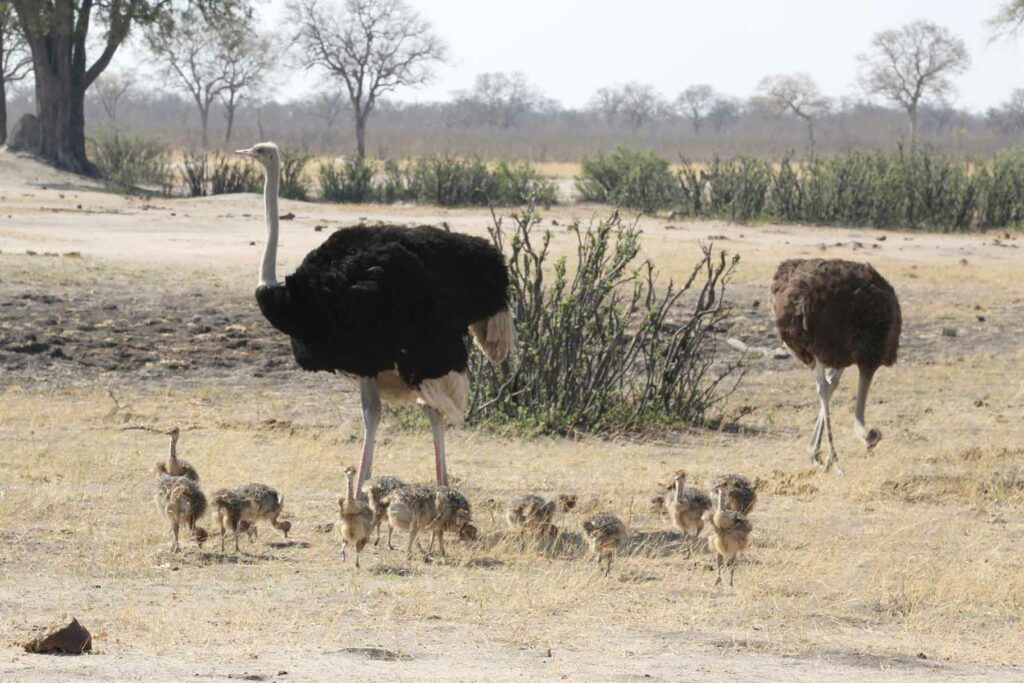
Ostriches. Ostriches can run up to 70 km/h. Tibiotarsal rotation is a significant problem in ostriches and in one study on its occurrence in birds aged 14 months, hens were able to run faster than cocks implying their easier escape from danger (J. S. Afr. Vet. Assoc. 78(1): 52-3). The strong limb musculature of the ostrich is necessary to facilitate running and defence especially in the flexors of the metatarsophalangeal joint (J. Anat. 211(3): 313-24). Hip abduction and knee internal-external and varus-valgus motion may facilitate limb clearance during the swing phase of running (J. Exp. Biol. 210(Pt. 14): 2548-62). Body roll and ab/adduction of the leg-shifted foot position of ostriches away from its turn direction, thus reducing the acceleratory-braking forces, is needed to prevent under- or over-rotation and aligning the leg with the ground reaction force (J. Exp. Biol. 210(Pt. 8): 1378-90). In the ostrich pelvic limb, high-power muscles are located proximally, whereas smaller distal muscles have very high force generation capacities. The largest capacity for force generation was noted in the extensors of the ankle, often associated with long tendons and functionally suited to elastic energy storage (J. Anat. 209(6): 765-79). Selection of walking or grounded running at intermediate speeds favours a reduction in the metabolic cost of locomotion characterised by a shift in locomotor kinetics from an inverted-pendulum gait to a bouncing gait that lacks an aerial phase. When the ostrich adopts an aerial-running gait at faster speeds, there is no abrupt transition in mechanical parameters or in the metabolic cost of locomotion (Proc. Biol. Sci. 271(1543): 1091-9). If a producer is experiencing limb deformities in his flock, he is likely to see great losses as affected ostrich chicks are unable to eat and drink effectively. Injuries can be sustained in limbs when the ostrich is entangled in inappropriately constructed wire fencing or, due to stress, collides violently with a paddock wall. Occasionally, severe tears may be observed in birds from protruding nails and bits of wire. Tibiotarsal rotation may also predispose birds to getting leg tumours in areas constantly being grazed during movement. Furthermore, the producer may experience considerable economic losses due to badly scratched and worn skin.
Chickens. In chickens, the primary reasons associated with impaired locomotion and poor leg health are linked to rates of growth, age of the bird, visits to flocks, bird genotype, lack of whole-wheat in feed, reduced daylight hours, higher stocking densities, lack of antibiotic use, and feeding intact feed pellets (PLoS ONE 3(2): e1545). Relative humidity was found to be extremely important in the first week of life as it influenced later health of chickens. As locomotion is affected by the overall health status of the chicken, efficient ventilation, drinkers, numbers of stockmen and litter type, are all important (Poult. Sci. 84(8): 1155-65). The lumbosacral specialisations of the vertebral canal and spinal cord may act as a means to control locomotion, especially as chicks begin walking soon after hatching (Anat. Embryol. (Berrl.) 210(1): 59-74). Motivation is the dominant determinative factor for walking in birds with a low body weight, and physical ability is the principal factor for walking in birds with a high body weight (Behav. Processes 67(2): 121-130). Indices of leg weakness in broilers vary considerably among commercial line crosses and include walking ability, tibial dyschondroplasia, foot pad burn, hock burn and angulation of the hock joint (Poult. Sci. 78(8): 1085-90). A shorter photoperiod may affect walking ability and tibial dyschondroplasia, although body weight plays a greater role (Poult. Sci. 78(3): 336-42). Broilers fed on low protein diets have lower body masses than diets with moderate or high protein concentrations. Interestingly, protein, sex or gait had no influence on bone parameters, bone strength being associated with skeletal weight and length (Br. Poult. Sci. 39(2): 251-6). Red light exposure increased growth when provided at the beginning of the rearing period, although bone strength was attenuated. Rearing chickens in bright red light increases activity and reduces locomotion disorders in the late rearing period (Poult. Sci. 76(12): 1674-81). High stocking densities lessen activity in broiler chickens, and birds stocked at a high density early in the rearing period are most active in the presence of people and show the longest immobility’s in response to stressful situations (Poult. Sci. 76(12): 1655-60). Layers place their legs directly under the centre of gravity resulting in the body moving in a straight line, whereas broilers shift the centre of gravity step-by-step laterally towards the position of the supporting leg. Limping in broilers with leg problems can be measured in the lateral and vertical movements of the right and left leg (Equine Vet. J. Suppl. 23: 110-2).
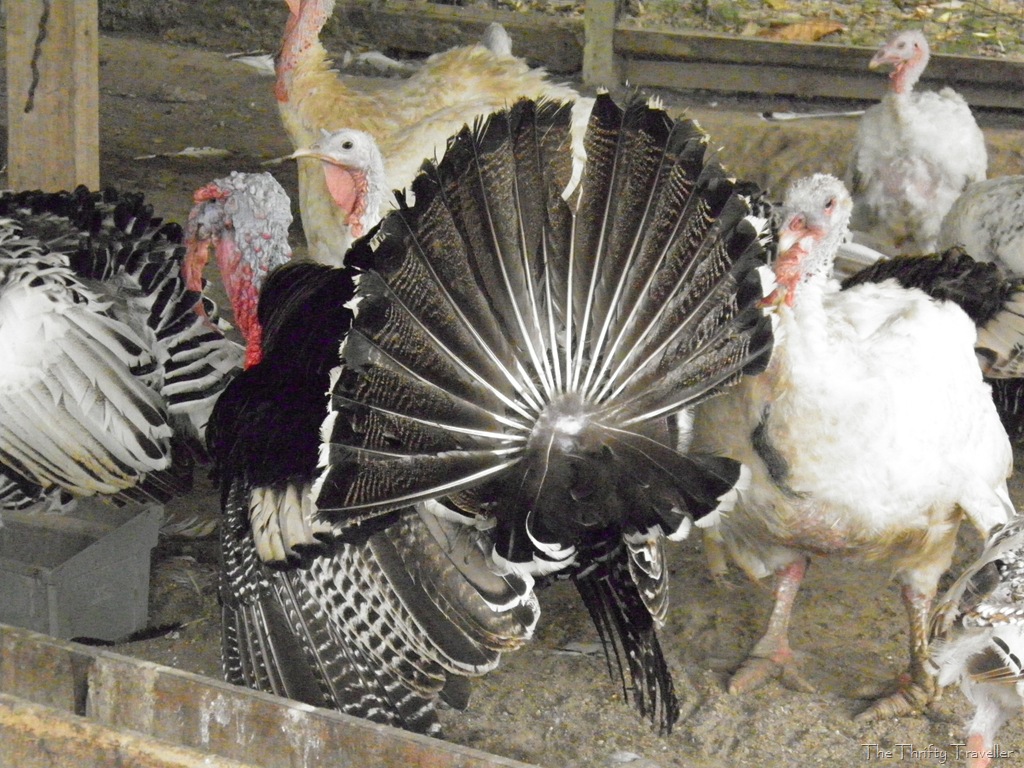
Turkeys. In turkeys the relatively poor relationship between muscle strain and running speed reflect the fact that changes in running velocity are non-associated with demands of mechanical work (J. Exp. Biol. 210(Pt. 14): 2510-7). At 18 weeks of age, turkeys spend a considerable proportion of time performing sexual courtship strutting. Other turkeys engage in running or frolicking behaviour, but rarely engage in dust bathing and ground-scratching whilst feeding. Lack of feather and injurious pecking may be attributable to low stocking densities of turkeys generally (Br. Poult. Sci. 39(3): 325-32). Crossing a turkey line selected for increased shank width and commercial sire lines, results in improvements in movement and walking of turkeys within pens (Poult. Sci. 76(10): 1327-31). Selection for increased shank width in turkeys with larger shank diameter, results in increases in the weight of the tibiotarsal and femur bones (Poult. Sci. 70(4): 739-45). Large genetic increases in body weight of male turkeys can be achieved without loss in walking ability by genetic increases in shank width (Poult. Sci. 64(12): 2248-55). Selection for increased body weight in turkeys results in accentuated numbers of eating bouts, decreased duration of walking bouts, and greater fear responses. Additionally, the rearing environment affects drinking, eating and resting behaviour, as indicated by range-reared turkeys which has fewer drinking bouts of increased duration and longer eating and resting bouts than confinement-reared birds (Poult. Sci. 75(2): 165-71). The gait of healthy turkeys includes a walk with perfectly symmetrical and repeatable hind limb movements. Lame turkeys exhibit bilateral, non-symmetrical, intermittent and non-systematic movements (Vet. Res. 24(1): 5-20).
Ross G. Cooper’s published books:
Lulu Press ~
https://www.lulu.com/spotlight/lifeinthebush/
Pneumasprings Press ~
https://www.pneumasprings.co.uk/product/the-flame-lily-weeps/

Related Content


