Threat of aphid-borne virus diseases outbreaks in the 2025-26 tobacco growing season

By Zimazile Jazi and Charles Karavina
Tobacco insect-monitoring activities by Kutsaga have shown higher aphid populations across major tobacco-growing regions of Zimbabwe at this stage of the 2025-2026 season compared to previous years. This concerning trend is being driven by multiple factors, including non-compliance with key tobacco production regulations such as stalk destruction and non-adherence to sowing and planting dates, as well as shifts in climatic conditions that favour aphid survival and population growth. If unchecked, these factors could trigger virus outbreaks that are as severe, or even worse, than those experienced historically, threatening both yield and quality of tobacco crops.
It is essential for all stakeholders, farmers, extension officers, and industry partners to work towards ensuring that aphid populations, are curbed to minimise virus spread, and protect the crops that are being established. Thus, this article provides critical information on current aphid trends, the risks they pose, and practical, actionable steps that must be implemented without delay to safeguard crops and livelihoods.
Aphids as viral vectors
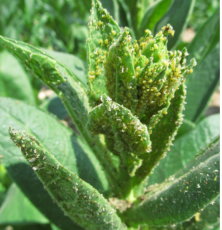
To access the plant sap for food, aphids insert their piercing-sucking mouthparts (stylets) into the plant tissue, and if the plant is infected, virus particles can attach to or enter the mouthparts. The aphid then carries the virus to other plants, thereby spreading the infection. Heavy aphid infestations negatively affect plant growth leading to reduced leaf quality and poor yield (Figure 1). Therefore, high aphid populations raise the risk of virus outbreaks, and the warmer temperatures are further accelerating the growth of these vector populations.
Several viral diseases such as Potato virus Y (PVY), Cucumber mosaic virus (CMV) and Tobacco bushytop virus (TBTV) are transmitted by aphids and thus an outbreak of these diseases could be devastating to the country’s tobacco sector. Early infections can lead to significant reductions in cured leaf grade and value and negatively impact the country’s production targets and economic earnings due to diminished yields.
The past and present of tobacco viruses in relation to aphid trends in Zimbabwe
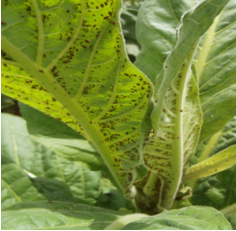
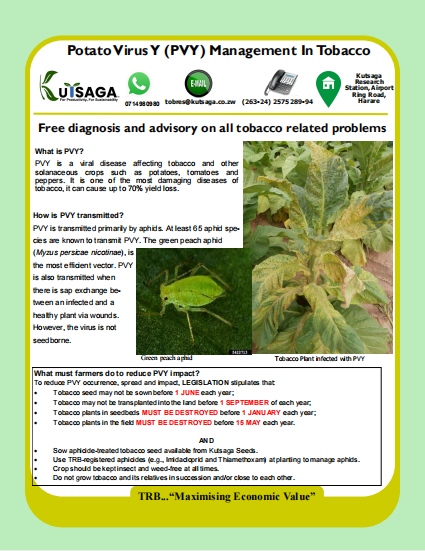
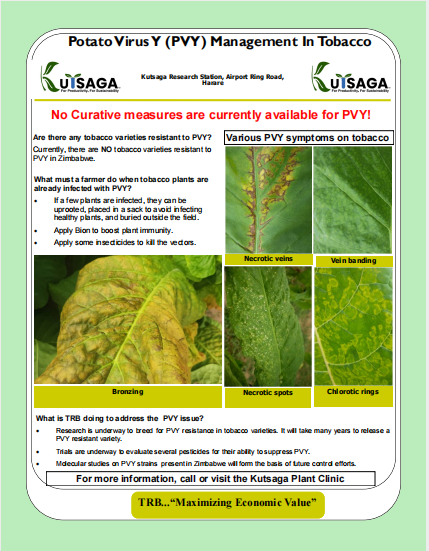
Zimbabwe’s tobacco industry has, since the 1960s, been threatened by insect-transmitted viral diseases such as PVY, CMV, Tomato spotted wilt virus (TSWV), Tobacco bushy top virus (TBTV), Tobacco etch virus (TEV) and Tobacco leaf curl virus (TLCV). While CMV, TSWV, TEV and TLCV have virtually disappeared from the landscape, PVY (Figure 2) and to a lesser extent, bushytop disease, continue to threaten the tobacco industry even to date. Both PVY and TBTV are vectored principally by the tobacco aphid, Myzus persicae nicotianae.
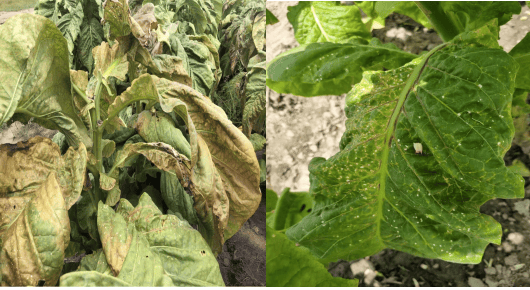
With the current trends, Zimbabwe’s tobacco industry is once again at risk of another PVY catastrophe, if no measures are taken to contain the situation. The virus caused major losses in the past, with the 2017-18 outbreak wiping out up to 70% of yields in some districts. A smaller outbreak in the 2023–24 season served as another warning: if farmers fail to follow production laws and best practices, the industry could face another major crisis in the current season.
Under the Plant Pests and Diseases Act Chapter 19:08:, all tobacco stalks must be destroyed by 15 May each year, and no plants should remain in the field by 1 June. This creates a “dead period” that starves both aphids and viruses of their host plants. When stalks are not destroyed, a “green bridge” forms, allowing aphids and PVY to survive between seasons and quickly spread at the start of the next crop. The more aphids present early in the season, the higher the risk and severity of PVY infections.
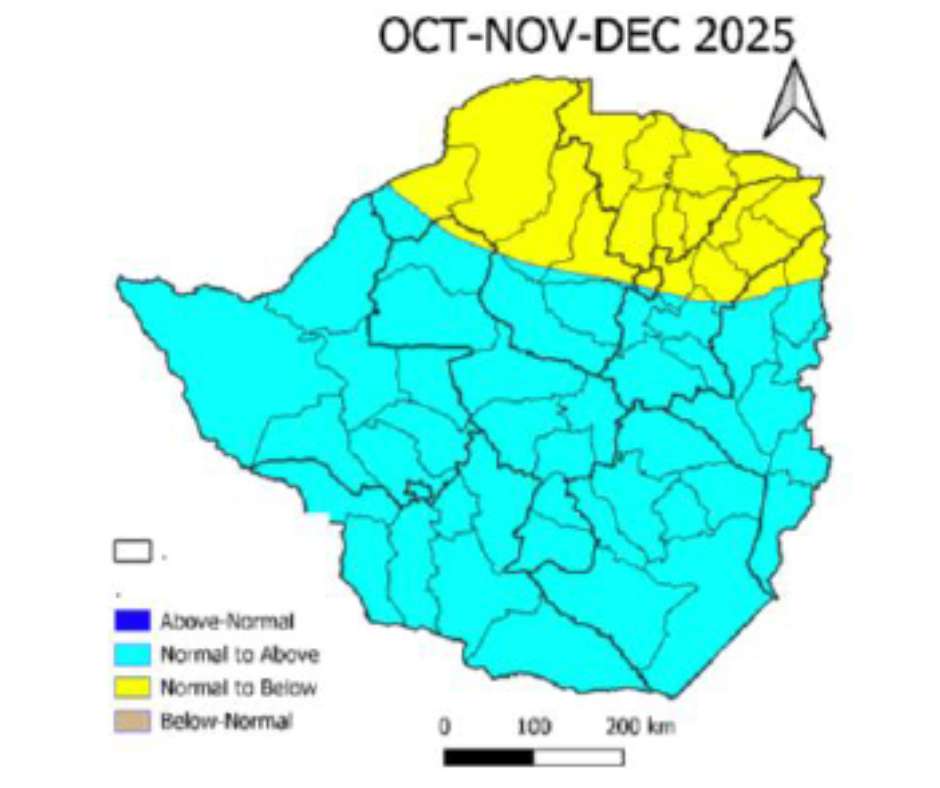
The threat posed by aphids and PVY this season is further heightened by forecasts from the Meteorological Services Department of Zimbabwe, which predict a transition from extremely dry conditions at the start of the season to wetter conditions later, driven by the El Niño and La Niña phenomenon. This climatic shift is likely to increase the risk of virus disease outbreaks.
El Niño and La Niña are opposite weather patterns that occur every few years due to changes in Pacific Ocean temperatures and wind patterns. These changes influence rainfall and temperatures worldwide, including in Zimbabwe. During El Niño, the Pacific Ocean warms, often causing hotter and drier conditions which will encourage early aphid population build-up. On the other hand, La Niña brings cooler ocean temperatures and generally wetter, cooler conditions which often stimulates fresh plant growth that sustains aphid feeding and prolonged virus spread. These conditions will likely affect mainly the rainfed crop, the majority of which is grown by smallholder farmers who depend solely on natural rainfall for tobacco production.
Implications to the farmer
The high aphid numbers combined with shifting El Niño–La Niña conditions pose a significant risk of severe virus outbreaks for farmers this season. If aphids are not detected early or controlled promptly, they can rapidly spread viruses like PVY, leading to significant yield losses. Failure to adhere to legislation by harbouring stalks and planting at undesignated times will maintain the virus cycle, further increasing the risk of infection in the next crop. Delayed aphid and virus detection will allow their infestations to build-up making chemical control less effective and potentially more costly. In short, careful monitoring, timely insecticide application, and strict adherence to planting and destruction dates are not optional, but critical steps to protect crops, preserve yields, and prevent financial losses this season.
Recommendations on mitigating the threat of aphid-borne diseases
To reduce the threat, growers are advised to strengthen virus and vector management and these include:
- Destroy all tobacco stalks so as to remove the vector and virus reservoir. Report undestroyed stalks to the authorities as soon possible.
- Regularly scout for aphids and early signs of viral infection. Aphids must be controlled immediately, and virus infected plants destroyed so that they do not act as reservoirs of the viruses.
- Remove volunteer plants and weeds that act as alternate virus hosts.
- Promptly use recommended aphid control measures when thresholds are reached.
- Growers are reminded that there are no viricides to control the disease once infection has occurred. However, farmers are strongly encouraged to apply acibenzolar-s-methyl (Bion) at 6 and 8 weeks after planting to induce systemic resistance in tobacco, which has been shown to enhancing the plant’s defence mechanisms against infection.
With tobacco viruses posing a major threat to yield and quality, and climatic conditions favouring vector activity, proactive monitoring and timely interventions will be critical for protecting the crop this season. Kutsaga will continue to monitor virus and aphid trends closely and will issue further advisories to support growers. Tobacco growers should report unusual pest and disease behaviours on the various communication platforms offered by Kutsaga.
If you have any queries regarding the above, or require further information, please feel free to contact, Kutsaga Research Station on VOIP 08688002604 or Email: kutsaga@kutsaga.co.zw or visit Kutsaga Research Station, Airport Ring Road, Harare.

Related Content